Patio Homes for Sale Near Me: The Complete Buyer’s Guide to Finding Your Perfect Low-Maintenance Home

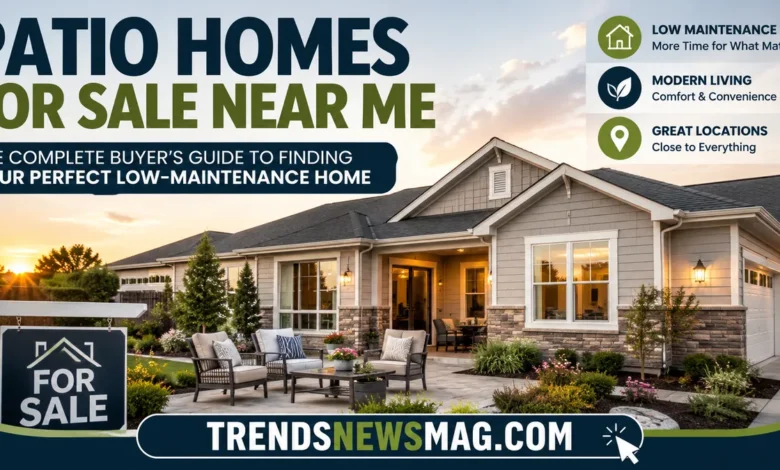
If you’ve typed patio homes for sale near me into a search bar recently, you’re not alone. More buyers than ever are drawn to this particular style of housing, and for good reason. Somewhere between the sprawling responsibilities of a traditional single-family house and the tight quarters of a condo sits a housing type that offers privacy, a small private outdoor space, and a level of maintenance freedom that appeals to busy professionals, retirees, and anyone tired of spending every Saturday mowing a lawn. Patio homes have quietly become one of the most requested housing categories in real estate searches across the country, and understanding what they actually are, how they’re priced, and what to watch for before signing a purchase agreement can save you thousands of dollars and months of frustration.


This guide walks through everything you need to know before you start touring properties. We’ll cover what defines a patio home, how it compares to other housing styles, what influences pricing in your local market, financing considerations, and the practical questions you should be asking every listing agent. Whether you’re a first-time buyer curious about this category or a longtime homeowner looking to downsize without sacrificing comfort, this article gives you the real-world insight you need to make a confident decision.
What Exactly Is a Patio Home? Understanding the Basics
A patio home is a single-story or occasionally two-story dwelling that typically sits on a smaller lot than a traditional detached house, often sharing at least one wall with a neighboring unit or positioned very close to adjacent properties. The defining feature, as the name suggests, is a small private patio or courtyard rather than a large yard. This design choice isn’t accidental. It reflects a deliberate shift toward efficient land use, reduced exterior upkeep, and a lifestyle that prioritizes low-maintenance living over expansive outdoor space.
Unlike condominiums, where you typically own only the interior airspace of your unit, patio home buyers usually own the land beneath their home, sometimes including a small yard or patio area. This distinction matters enormously when it comes to property rights, resale value, and how much control you have over renovations. Some patio homes are part of a planned community with a homeowners association, while others are standalone properties without any shared governance structure at all. When people search for patio homes for sale near me, they’re often surprised to learn just how much variation exists within these standard housing category definitions, ranging from modest 1,200-square-foot units to luxury patio homes exceeding 3,000 square feet with high-end finishes and private garages.
Architecturally, patio homes tend to favor open floor plans, single-level living, and design elements that minimize stairs and long hallways. This makes them particularly appealing to buyers who want accessibility built into the home rather than retrofitted later. Builders often cluster these homes in groups of four to eight units, arranged around shared green spaces, walking paths, or small parks, which creates a sense of community while still preserving individual privacy. As one longtime real estate broker put it, “Patio homes give people the feeling of owning a real house, with a real yard-like space, without the burden of maintaining an acre of grass every weekend.”
Why Patio Homes for Sale Near Me Are Attracting So Much Buyer Interest
The surge in interest around patio homes for sale near me isn’t a coincidence. Several demographic and lifestyle trends are converging at once, and patio homes happen to sit at the intersection of nearly all of them. Baby boomers are downsizing in massive numbers, looking to trade four-bedroom houses for something more manageable without giving up the feeling of owning a detached property. At the same time, younger professionals who value their weekends are increasingly allergic to the idea of spending hours on lawn care, gutter cleaning, and exterior maintenance that a traditional home demands.
There’s also a financial angle worth considering. In many markets, patio homes are priced below comparable single-family houses of similar square footage, largely because the lots are smaller and the shared maintenance model reduces some of the built-in costs of ownership. This makes patio homes an attractive entry point for buyers who want the tax benefits and equity-building potential of homeownership without stretching their budget to the absolute limit. A financial planner I spoke with recently noted, “Clients who buy patio homes often end up with more disposable income each month simply because they’re not pouring money into lawn services, roof repairs, or exterior painting the way single-family homeowners are.” Managing these long-term housing costs and clearing personal credit issues is essential before applying, a topic often discussed in debt resolution guides like the Spire Recovery Solutions overview.
Location plays a significant role too. Because patio homes require less land per unit, developers can build them in desirable, closer-in neighborhoods where large single-family lots simply aren’t available anymore. This means when you search for patio homes for sale near me, you’re often finding options in walkable, amenity-rich areas that would otherwise be priced out of reach. Buyers love these locations because they offer quick, convenient access to popular local retail hubs, whether you are looking for an Old Navy near me for daily clothing needs or searching for outdoor gear outlets like Sierra Trading Post nearby. if you were shopping for a traditional detached house with a full-size yard. The combination of location, lower maintenance, and relative affordability explains why this housing category has grown so quickly in popularity over the past several years.
Patio Homes vs Single-Family Homes vs Condos: Key Differences
Understanding how patio homes stack up against other housing types is essential before you commit to a purchase. Many buyers assume patio homes are simply small single-family houses, while others mistakenly lump them in with condos. Both assumptions miss important distinctions that affect ownership rights, monthly costs, and long-term flexibility.
With a traditional single-family home, you own the structure and the entire lot outright, with no shared walls and typically no HOA unless you’re in a planned development. Maintenance responsibility falls entirely on you, which means more freedom to customize but also more time and money invested in upkeep. A condominium, on the other hand, usually involves owning only the interior of your unit while the building’s exterior, structure, and common areas are collectively owned and maintained by the HOA, funded through monthly dues. This arrangement offers the lowest personal maintenance burden but the least amount of control over exterior changes.
Patio homes occupy the middle ground. You typically own the land your home sits on, plus the structure itself, but exterior maintenance such as landscaping, roofing, or painting is frequently handled by an HOA, particularly in newer developments. This hybrid model gives buyers a taste of both worlds: enough ownership to build genuine equity and make interior modifications freely, combined with enough shared services to avoid weekend chores. It’s worth noting that not every patio home community includes HOA-managed exterior maintenance, so this is a detail you’ll want to confirm on a case-by-case basis rather than assuming it applies universally.
Who Should Consider Buying a Patio Home
Not every buyer is a natural fit for patio home living, and being honest about your lifestyle preferences upfront will save you from a mismatch down the road. Retirees and empty nesters represent one of the largest buyer segments, and it’s easy to see why. After decades of maintaining a large family home, the appeal of single-level living, a smaller footprint, and shared exterior upkeep is enormous. Many retirees specifically search for patio homes for sale near me because they want to stay in their existing city or neighborhood rather than relocating entirely, while still shedding the physical demands of a bigger property.
Busy professionals and frequent travelers form another strong segment. If you’re someone who spends significant time away from home for work, the idea of coming back to an unmowed lawn or a to-do list of exterior repairs can be exhausting. Patio homes remove much of that burden, letting you lock the door and leave without worrying about what’s happening outside. Similarly, This lifestyle suits young professionals balancing hectic work schedules, from corporate executives to managers keeping up with fast-paced shifts like those found in Dunkin Donuts jobs networks. buyers who simply prefer a smaller, more intentional living space, rather than paying for square footage they’ll never use, often gravitate toward this category because it forces a more efficient, purposeful approach to home design.
That said, patio homes aren’t ideal for everyone. Families who want a large private backyard for children or pets to roam freely may find the smaller patio spaces limiting. Buyers who enjoy extensive gardening or exterior customization projects might also feel restricted, particularly in communities where an HOA governs landscaping decisions. Before falling in love with a listing, it’s worth spending real time reflecting on how you actually use outdoor space and how much control over exterior maintenance genuinely matters to you.
Where to Start Your Search When Looking for Patio Homes for Sale Near Me
Once you’ve decided a patio home fits your lifestyle, the search process itself deserves a strategic approach. Start by identifying which neighborhoods in your target area actually contain patio home developments, since this housing type isn’t evenly distributed the way single-family homes are. Many patio homes exist within specific planned communities or subdivisions built explicitly around this concept, so a broader neighborhood search might miss inventory that a more targeted search would catch.
Working with a real estate agent who has specific experience with patio homes for sale near me can make a substantial difference. These agents understand the nuances of HOA documents, shared wall agreements, and lot boundary questions that generalist agents sometimes overlook. Ask any prospective agent directly how many patio home transactions they’ve closed in the past year and whether they can walk you through a sample HOA disclosure packet. Their answer will tell you a lot about their familiarity with this niche.
It’s also worth casting a wide net across multiple listing sources rather than relying on a single platform. Builder websites for active patio home communities often list new construction inventory before it appears on broader listing sites, giving you a head start on newer developments. Local real estate association websites, county property records, and even direct outreach to established patio home communities asking about resale availability can surface options that a generic online search might miss entirely. Patience matters here too. Because patio home inventory tends to be more limited than standard single-family listings in many markets, the right property might take a bit longer to surface, but the wait is often worth it for buyers who know exactly what they want.
Understanding HOA Fees, Maintenance, and Shared Responsibilities

One of the most important, and most frequently misunderstood, aspects of patio home ownership involves the homeowners association. Because many patio home communities rely on an HOA to manage shared exterior maintenance, understanding exactly what those fees cover, and what they don’t, is critical before you make an offer. Monthly or quarterly HOA dues can range from modest amounts covering only common area landscaping to more substantial fees that include roof replacement reserves, exterior painting, irrigation systems, and even basic insurance coverage for the building’s structure.
Before purchasing, always request the HOA’s financial statements, reserve study, and meeting minutes from the past year. These documents reveal whether the association is financially healthy or facing a looming special assessment that could hit your wallet unexpectedly. A real estate attorney I consulted while researching this topic emphasized, “Buyers get so focused on the home itself that they forget the HOA is basically a business partner they’re signing up with for the next several years, and that partnership deserves real due diligence.”
It’s also worth clarifying exactly where your personal maintenance responsibility begins and ends. In some patio home communities, homeowners are responsible for everything inside the exterior walls, including windows and doors, while the HOA handles roofing, siding, and common landscaping. In others, the line is drawn differently, with individual owners responsible for their private patio space while everything else falls under association control. Getting this boundary in writing, and confirming it matches what the listing agent told you verbally, prevents costly misunderstandings after closing.
Pricing Trends and What Influences Patio Home Values
Pricing for patio homes varies considerably depending on location, age of construction, HOA amenities, and overall market conditions. Generally speaking, patio homes tend to be priced somewhere between condos and comparable single-family homes in the same area, though this isn’t a universal rule and plenty of exceptions exist, particularly in luxury patio home developments that command premium pricing due to high-end finishes and prime locations.
Several factors consistently influence patio home values across different markets. Proximity to amenities such as shopping, healthcare, and recreational facilities plays a major role, especially since many patio home buyers prioritize convenience over sprawling square footage. The reputation and financial health of the HOA also affects resale value significantly; a well-managed community with healthy reserves and reasonable dues tends to hold value better than one with a history of special assessments or deferred maintenance. Age and construction quality matter too, with newer patio home developments often commanding higher prices due to modern floor plans, energy-efficient systems, and updated finishes compared to older communities built decades ago.
The table below offers a general comparison of how patio homes typically stack up against other common housing types in terms of price positioning, maintenance responsibility, and ownership structure. Keep in mind that actual figures vary widely by region, so use this as a conceptual framework rather than a precise pricing guide for your specific market.
| Housing Type | Typical Ownership Structure | Exterior Maintenance | Relative Price Position | Outdoor Space |
|---|---|---|---|---|
| Single-Family Home | Own structure and land outright | Fully owner responsibility | Generally highest for comparable square footage | Full private yard |
| Patio Home | Own structure and land, often smaller lot | Frequently HOA-managed | Mid-range, often below single-family homes | Small private patio or courtyard |
| Condominium | Own interior unit only | HOA-managed entirely | Generally lowest for comparable square footage | Minimal or shared common areas |
| Townhome | Own structure and small lot, shared walls | Mixed, varies by community | Similar to or slightly below patio homes | Small yard or patio, sometimes fenced |
When you’re evaluating patio homes for sale near me, comparing recent sold listings rather than just active listings gives you a far more accurate sense of true market value. Active listing prices reflect what sellers hope to get, while sold prices reflect what buyers actually paid, and the gap between these two numbers can be substantial in either a hot or cooling market.
Financing a Patio Home: What Buyers Need to Know
Financing a patio home is generally similar to financing a traditional single-family home, but there are a few nuances worth understanding before you apply for a mortgage. Because you typically own both the structure and the land, most conventional loan programs treat patio homes the same way they treat detached single-family properties, which is good news for buyers worried about limited financing options. However, if the property is structured more like a planned unit development with shared ownership elements, lenders may require additional documentation about the HOA’s financial standing before approving your loan.
Appraisers also need to understand the specific characteristics of patio homes to value them accurately. Because these properties don’t always have a large pool of directly comparable sales nearby, especially in markets where patio homes are less common, appraisals can sometimes take longer or require the appraiser to expand their search radius to find suitable comparable properties. It’s worth discussing this possibility with your lender early in the process so you’re not caught off guard by delays.
Down payment requirements, interest rates, and loan terms for patio homes generally mirror those available for comparable single-family properties, assuming the HOA meets standard lender requirements around financial reserves, insurance coverage, and owner-occupancy ratios. If you’re using an FHA or VA loan, it’s especially important to confirm the specific patio home community is approved for that loan type, since not every HOA maintains the certifications required for government-backed financing. A mortgage broker I interviewed for this piece explained it well: “Patio homes finance almost identically to regular houses in most cases, but that HOA approval piece is the one detail buyers sometimes forget to check until it’s almost too late in the process.”
Questions to Ask Before You Buy
Walking into a patio home purchase informed means asking the right questions well before you’re standing at the closing table. Start with the HOA itself. Ask what the current monthly or quarterly dues are, whether there have been any special assessments in the past five years, and what percentage of homes in the community are owner-occupied versus rented out, since a high rental ratio can sometimes affect financing eligibility and community dynamics.
Next, dig into the specifics of what maintenance responsibilities fall on you versus the association. Request a copy of the community’s covenants, conditions, and restrictions, commonly known as CC&Rs, and actually read through them rather than skimming. These documents dictate everything from what color you can paint your front door to whether you’re allowed to install a fence around your small patio space. Buyers who skip this step sometimes discover restrictions after moving in that conflict with plans they had for the property.
It’s also smart to ask about noise and privacy considerations given the closer proximity to neighbors that’s common in patio home developments. Standing inside the home during a weekday evening, if possible, gives you a realistic sense of sound transfer between units. Finally, ask directly about the age and condition of major systems, including the roof, HVAC, and plumbing, along with whether these fall under HOA responsibility for replacement or remain the individual owner’s obligation. Getting clear answers to these questions before making an offer puts you in a far stronger negotiating position and protects you from unpleasant surprises after you’ve already moved in.
Common Mistakes Buyers Make
Even experienced homebuyers stumble into avoidable mistakes when purchasing a patio home for the first time, largely because the ownership structure differs enough from a typical single-family purchase that old assumptions don’t always apply. One of the most common errors is failing to thoroughly review HOA financial documents, assuming that because monthly dues seem reasonable, the association must be in good financial shape. Reserve studies can reveal a very different picture, showing an HOA that’s underfunded and likely to hit homeowners with a significant special assessment within the next few years.
Another frequent mistake involves underestimating how much personal outdoor space actually matters day to day. Buyers coming from larger single-family homes sometimes assume they’ll adjust easily to a smaller patio area, only to feel cramped or restless once they’ve actually lived in the space for a few months. Spending time in comparable patio home communities before committing, perhaps even renting briefly if that’s an option in your target area, can prevent this kind of buyer’s remorse.
Overlooking resale considerations is another pitfall worth avoiding. While patio homes appeal to a growing segment of buyers, the resale pool in some markets remains smaller than for traditional single-family homes, which can affect how quickly you’re able to sell down the road and at what price point. Researching how patio homes in your target community have historically appreciated, and how long similar properties typically stay on the market before selling, gives you a realistic picture of your future exit strategy rather than assuming resale will be effortless simply because you personally love the property.
Tips for Touring and Evaluating Patio Homes

Touring a patio home effectively requires paying attention to details that might not matter as much in a traditional single-family home search. Because shared walls or close proximity to neighbors are common, pay close attention to sound insulation during your visit. Knock on interior walls to get a sense of construction quality, and if possible, visit at different times of day to gauge typical neighborhood noise levels, including traffic from shared driveways or parking areas.
Examine the private patio or courtyard space carefully, considering not just its size but also its orientation and privacy level. A south-facing patio might get more sun exposure throughout the day, which could be a benefit or a drawback depending on your climate and personal preferences. Check whether fencing or landscaping around the patio provides genuine privacy from neighboring units, or whether you’ll feel exposed every time you step outside.
Walk the broader community as well, not just the individual unit you’re considering. Look at how well common areas are maintained, whether shared amenities like walking paths or small parks appear well cared for, and how many homes in the development show visible signs of neglect, which can hint at broader HOA management issues. Talking to current residents, if you get the opportunity during your visit, often provides more honest insight into day-to-day living than anything you’ll find in official marketing materials. As one patio home resident told me during research for this article, “I learned more about this community from a five-minute chat with my future next-door neighbor than I did from the entire glossy sales brochure.”
The Emotional and Lifestyle Benefits of Downsizing to a Patio Home
Beyond the practical financial and maintenance considerations, there’s a genuine emotional dimension to choosing a patio home that deserves attention. For many buyers, particularly those transitioning out of a large family home after children have moved out, downsizing represents a significant life shift, and it’s not purely a logistical decision. There’s often grief mixed with relief, nostalgia mixed with anticipation. Recognizing this emotional complexity upfront can make the transition smoother rather than something you fight against internally.
The freedom that comes with reduced maintenance responsibility often translates into more time for the things that actually matter, whether that’s travel, hobbies, spending time with grandchildren, or simply having unstructured free time without a mental list of home repair projects looming overhead. Many patio home residents describe an almost immediate sense of lightness after moving in, a feeling that their home now serves their life rather than demanding their life be organized around serving it.
There’s also a strong community element that shouldn’t be underestimated. Because patio home developments are often built with shared common spaces and a more compact neighborhood layout, residents frequently report stronger social connections with neighbors compared to sprawling single-family subdivisions where houses might sit on quarter-acre lots with significant physical and social distance between them. This built-in sense of community proves especially valuable for retirees or anyone relocating to a new area without an existing local social network already in place.
Conclusion
Searching for patio homes for sale near me opens the door to a housing category that genuinely fits the lifestyle needs of a growing number of buyers, from retirees seeking single-level simplicity to busy professionals who’d rather spend weekends doing anything other than yard work. Understanding what truly defines a patio home, how it compares to single-family houses and condos, and what financial and legal details deserve your attention before signing anything puts you in a far stronger position than buyers who walk into this process blind.
The key takeaways worth carrying forward are straightforward but important. Always dig deep into HOA financial health and governing documents rather than taking monthly dues at face value. Spend real time evaluating whether the smaller private outdoor space genuinely fits how you live day to day. Work with an agent who understands the specific nuances of this housing type, and don’t rush the search simply because inventory feels limited in your target area. Patio homes offer a compelling middle ground between full-maintenance single-family living and the more restrictive ownership structure of a condo, and for the right buyer, that middle ground represents exactly the kind of home that supports a genuinely better quality of life.
FAQs
What is the difference between a patio home and a townhome?
While the two categories overlap in some markets, patio homes are typically single-story dwellings on their own small lot with minimal or no shared walls, whereas townhomes are almost always multi-story properties that share at least one wall with neighboring units on either side. Patio homes tend to emphasize single-level accessibility and a private patio space, while townhomes often prioritize vertical space efficiency in denser urban or suburban settings. That said, terminology varies regionally, so it’s always worth confirming exactly how a specific listing defines itself rather than relying purely on the label.
Are patio homes a good investment?
Patio homes can absolutely be a solid investment, particularly in markets with strong demand from retirees and downsizing buyers, but the answer depends heavily on local market conditions, HOA financial health, and how the specific community has historically appreciated compared to other housing types nearby. Researching recent sold prices, average days on market, and long-term appreciation trends for patio homes for sale near me in your specific target area gives you a much clearer picture than general national trends, since real estate performance varies enormously by location.
Do patio homes typically have a garage?
Many patio homes include an attached one- or two-car garage, though this varies depending on the age and design of the specific development. Older patio home communities sometimes feature carports or detached parking structures instead of attached garages, while newer construction increasingly includes attached garages as a standard feature since buyer demand for enclosed, secure parking has grown steadily over the years. Always confirm garage details directly on individual listings rather than assuming based on the broader category.
How much are HOA fees for a typical patio home?
HOA fees for patio homes vary widely depending on what services and amenities the association covers, ranging from modest fees covering only basic landscaping to more substantial monthly dues that include roof maintenance, exterior painting, insurance, and community amenities like pools or clubhouses. Rather than focusing on a single average number, request the specific fee schedule and a breakdown of exactly what’s included for any patio home for sale near me that you’re seriously considering, since this detail affects your true monthly housing cost far more than the sale price alone.
Can I customize the exterior of a patio home?
Exterior customization rules depend entirely on the specific community’s covenants, conditions, and restrictions, and this varies significantly from one HOA to another. Some patio home communities allow homeowners considerable freedom over patio landscaping and minor exterior changes, while others maintain strict uniformity requirements covering everything from paint colors to what plants you’re permitted to grow. Reading the CC&R documents thoroughly before purchasing, rather than after, ensures you understand exactly what level of personalization you’ll realistically have once you own the property.
Are patio homes suitable for families with young children?
Patio homes can work for smaller families, but the reduced private outdoor space is worth carefully considering if you have young children who need room to play outdoors safely and independently. Some patio home communities include shared green spaces or small parks that partially offset the smaller private yards, which can work well for families who prioritize community amenities over expansive private space. Ultimately, touring the specific community and honestly assessing whether the available outdoor space, both private and shared, meets your family’s needs is more useful than making assumptions based on the housing category alone.
How do I find new construction patio homes for sale near me?
Finding new construction patio homes typically requires checking builder websites directly, since new developments sometimes appear there before showing up on broader real estate listing platforms. Local homebuilder associations, new home sales offices, and real estate agents who specialize in new construction can also provide early access to upcoming patio home communities in your target area. Visiting model homes in person gives you a realistic sense of finishes, floor plans, and community layout that photos alone often fail to fully capture, making it a worthwhile step before committing to a purchase agreement on a yet-to-be-built property.
Trending Today: [Japan Startup News Today]