Custom Drawer Boxes: The Complete Guide to Building Storage That Actually Lasts

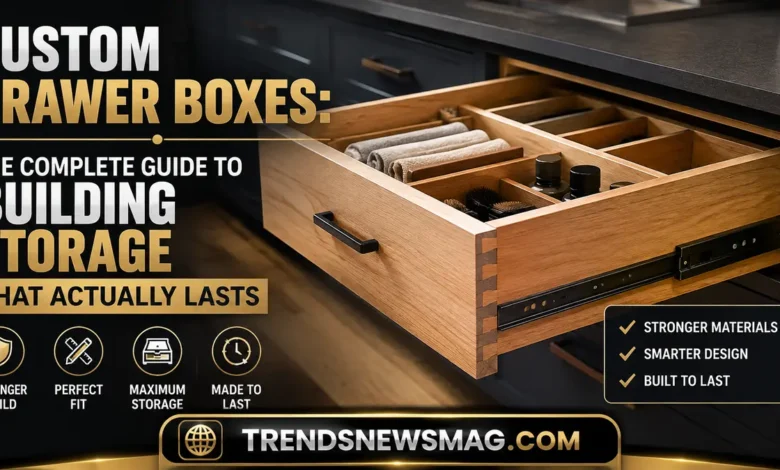
Anyone who has ever yanked open a drawer only to hear that unmistakable wobble-and-scrape sound knows the frustration of poorly built storage. It’s a small thing, really, until it isn’t. Until the drawer sticks on a humid afternoon, or the bottom panel sags under the weight of pots and pans, or the joints start separating after eighteen months of daily use. This is where the conversation about custom drawer boxes becomes less of a luxury topic and more of a practical necessity for anyone serious about their home or workshop.


I’ve spent a fair amount of time around cabinet shops, lumber yards, and renovation projects, and if there’s one lesson that keeps repeating itself, it’s this: the drawer box is the unsung hero of any storage system. Nobody brags about their drawer boxes at dinner parties. Nobody posts them on social media. But they’re the component that determines whether your kitchen renovation feels premium a decade from now or starts falling apart within a few years. Custom drawer boxes solve a problem that stock, one-size-fits-all boxes simply cannot address — precision fit, material quality, and long-term structural integrity tailored to your exact space.
What Exactly Are Custom Drawer Boxes and Why Do They Matter
At their core, custom drawer boxes are storage components built to exact specifications rather than pulled from a standardized inventory. Unlike mass-produced drawers that come in predetermined sizes and force you to adjust your cabinetry to fit them, custom drawer boxes are manufactured to match the precise dimensions of your cabinet openings. This might sound like a minor distinction, but anyone who has dealt with a half-inch gap on one side of a drawer and a jammed fit on the other understands why precision matters enormously.
The construction methods used in custom drawer boxes also tend to differ significantly from what you’d find in a big-box retail option. Quality manufacturers typically use dovetail joinery, solid maple or birch plywood construction, and full-extension soft-close slides rather than the stapled particleboard and friction-based tracks common in cheaper alternatives. According to woodworking resources cited by the Smithsonian Institution’s archives on furniture craftsmanship, dovetail joints have remained the gold standard for drawer construction for centuries precisely because they distribute weight and stress evenly across the joint, preventing the racking and separation that plagues lesser construction methods. When you invest in custom drawer boxes, you’re essentially buying into that same time-tested engineering principle, scaled for modern kitchens, offices, and closets.
There’s also an emotional and functional layer to this that’s easy to overlook. A drawer that glides smoothly every single time you open it changes how you interact with your kitchen or workspace daily. It removes a tiny but persistent source of friction from your life. Multiply that by the dozens of times a day most households open and close drawers, and the cumulative impact on daily satisfaction becomes surprisingly significant. This is part of why interior designers and cabinet makers alike treat custom drawer boxes as a foundational element of quality craftsmanship rather than an optional upgrade.
The Real Difference Between Custom and Stock Drawer Boxes
Stock drawer boxes exist because they’re cheap and fast to produce. Manufacturers churn out standardized sizes — typically in increments of an inch or two — and retailers stock these in bulk. The appeal is obvious: lower cost, immediate availability, and no waiting period. For certain budget-conscious projects, stock options can serve a purpose. But the moment your cabinet openings deviate even slightly from those standard measurements, which happens constantly in older homes, custom builds, or irregular spaces, stock boxes start requiring shims, spacers, and workarounds that compromise both appearance and function.
Custom drawer boxes eliminate this guesswork entirely. A skilled fabricator measures your actual cabinet opening, accounts for the slide hardware you’ll be using, and builds the box to fit that exact space with tolerances often within a fraction of a millimeter. This precision translates directly into smoother operation, better weight distribution, and a finished look that doesn’t scream “retrofit.” I remember talking to a cabinet installer in the Midwest who put it simply: “You can always tell a custom box from a stock one within thirty seconds of opening it. The stock ones fight you a little. The custom ones just work.” That small but telling observation captures the entire value proposition.
Material quality is another area where the gap widens considerably. Stock drawer boxes frequently use lower-grade plywood or even MDF cores with thin veneers, materials that are more susceptible to moisture damage and structural fatigue over time. Custom manufacturers, particularly those catering to kitchen and bath professionals, tend to offer choices between birch, maple, and sometimes higher-end options like walnut or oak, each with different weight capacities, aesthetic qualities, and price points. This flexibility means you’re not settling for whatever happens to be in stock; you’re specifying exactly what your project demands.
Below is a comparison table that breaks down the practical differences between custom and stock drawer boxes across the factors that matter most to homeowners and contractors alike.
| Feature | Custom Drawer Boxes | Stock Drawer Boxes |
|---|---|---|
| Fit precision | Built to exact cabinet measurements | Standardized sizes, may require shimming |
| Material options | Wide range including solid maple, birch, walnut | Limited, often lower-grade plywood or MDF |
| Joinery method | Dovetail or mortise-and-tenon common | Often stapled or doweled construction |
| Weight capacity | Higher, suited for cookware and tools | Moderate, best for lighter items |
| Lead time | Typically several days to a few weeks | Immediate or next-day availability |
| Cost per unit | Higher upfront investment | Lower initial cost |
| Longevity | Often 15-25+ years with proper care | 5-10 years average lifespan |
| Aesthetic customization | Full control over finish, edge profile, dovetail spacing | Fixed appearance, minimal options |
This table illustrates why so many contractors and homeowners eventually gravitate toward custom drawer boxes despite the higher upfront cost. The math tends to work out favorably over a decade or two, especially when you factor in the reduced likelihood of repairs, replacements, or the frustration of living with poorly fitting storage.
How Custom Drawer Boxes Are Actually Manufactured
Understanding the manufacturing process helps clarify why custom drawer boxes command a premium price and why that premium is generally justified. The process typically begins with precise measurement, either taken on-site by a professional or submitted by the customer using detailed specifications. This measurement phase is arguably the most critical step because even a small error here cascades through every subsequent stage of production.
Once measurements are confirmed, fabricators select and cut the material according to the specified dimensions. High-quality shops use CNC routing equipment for the joinery cuts, which ensures consistency across every single box in an order, whether that order is for three drawers or three hundred. Dovetail joints, in particular, require exacting precision because the interlocking pins and tails need to fit snugly without gaps but also without being forced, which could crack the wood. This is genuinely skilled work, and it’s part of why not every shop that claims to build custom drawer boxes actually delivers consistent quality.
After the joinery is cut, the pieces are assembled, typically with wood glue reinforcing the mechanical joint, and then sanded to remove any rough edges. The bottom panel, usually a thinner plywood or hardboard, is inserted into a groove routed along the interior bottom edge of the box sides, providing structural support without adding unnecessary weight. Finishing options vary widely at this stage; some custom drawer boxes are left unfinished for installers who want to match stain to existing cabinetry, while others come pre-finished with clear coats, stains, or even melamine surfacing for moisture resistance in kitchen or bathroom applications.
Quality control matters enormously in this final stage. Reputable manufacturers inspect each box for square corners, smooth glide surfaces where slides will attach, and consistent joint tightness before packaging and shipping. A cabinet shop owner I spoke with years ago mentioned that his team rejects roughly five percent of their own production runs due to minor imperfections invisible to most customers but unacceptable by their internal standards. That kind of attention to detail is precisely what separates premium custom drawer boxes from the mass-market alternative sitting on a home improvement store shelf.
Choosing the Right Material for Your Custom Drawer Boxes
Material selection is one of the most consequential decisions in the entire custom drawer box process, and it’s an area where many homeowners underestimate the long-term implications of their choice. Birch plywood remains among the most popular options because it strikes a favorable balance between cost, strength, and appearance. It has a tight, consistent grain that finishes beautifully and resists warping better than many softer wood alternatives, making it a reliable default for kitchen applications where humidity fluctuates throughout the year.
Maple, meanwhile, sits a notch higher in both price and perceived quality. Its density gives custom drawer boxes exceptional durability, and its pale, uniform coloring makes it a favorite for kitchens where the drawer interiors will be visible, such as open shelving or glass-front cabinets. Maple also takes stain exceptionally well if you want the interior to match exterior cabinet finishes, though many designers prefer leaving it natural for a clean, bright look inside the drawer.
For those seeking a more luxurious result, walnut and oak custom drawer boxes are available, though they come at a significantly higher price point. These hardwoods are typically reserved for high-end kitchen remodels, custom furniture pieces, or situations where the drawer box itself becomes part of the visual design rather than a hidden functional element. Some homeowners specifically request walnut drawer boxes for jewelry armoires or display cases where opening the drawer reveals the wood grain as part of the overall aesthetic experience.
There’s also the moisture-resistant category worth mentioning, particularly relevant for bathroom vanities, outdoor kitchens, or coastal homes dealing with higher ambient humidity. Melamine-surfaced custom drawer boxes or those treated with moisture-resistant sealants offer an additional layer of protection against warping and swelling. As the U.S. Environmental Protection Agency notes in its guidance on indoor moisture control, sustained humidity exposure is a leading contributor to material degradation in home construction, and drawer boxes are certainly not immune to this reality. Choosing the right material upfront, based on your specific environment, prevents headaches years down the road.
Sizing and Measuring for Custom Drawer Boxes the Right Way
Getting the measurements right is where many DIY projects go sideways, and it’s worth spending real time understanding this process before placing an order. The fundamental rule is that you’re not measuring the cabinet opening directly for the drawer box dimensions; you’re measuring the opening and then subtracting clearance for the slide hardware you plan to use. Different slide types require different amounts of clearance, typically somewhere between half an inch and one inch total, split between both sides of the drawer box.
Height is another dimension that trips people up. You need to account for the slide hardware’s vertical clearance requirements, plus leave enough room above the drawer box for smooth operation without rubbing against the cabinet frame or the drawer front above it. Depth measurements should factor in both the cabinet’s interior depth and the specific slide length you’re using, since full-extension slides behave differently than standard three-quarter extension hardware in terms of how far the box can be recessed.
A practical tip that experienced installers swear by: always measure at multiple points within the same cabinet opening, not just once. Older homes especially can have openings that aren’t perfectly square, with variations of a quarter inch or more between the top and bottom of the same opening. Custom drawer box manufacturers will typically ask for the smallest measurement to ensure the box fits without binding, since it’s far easier to address a slightly loose fit with adjustment than to force an oversized box into a tight opening.
Many custom drawer box companies now offer online calculators or downloadable measurement guides specifically designed to walk customers through this process step by step. Taking advantage of these resources, or better yet, having a professional installer take the measurements, dramatically reduces the risk of ordering errors that result in returns, delays, or ill-fitting final products. It’s genuinely one of those situations where measuring twice, or even three times, saves considerable frustration later.
Drawer Slide Compatibility and Why It Matters So Much

The relationship between custom drawer boxes and the slide hardware they pair with is more intertwined than most people realize. Choosing the wrong slide type for your drawer box dimensions, or vice versa, can result in operational problems ranging from minor annoyances to complete functional failure. Full-extension ball-bearing slides, for instance, allow the drawer to pull completely out of the cabinet, offering full access to contents at the back of the box, which is particularly valuable for deep kitchen drawers storing pots, pans, or small appliances.
Soft-close mechanisms have become something of an expected standard in premium custom drawer boxes over the past decade, and for good reason. These mechanisms use a hydraulic or pneumatic dampening system that catches the drawer in the final few inches of travel and eases it shut silently, rather than allowing it to slam. Beyond the obvious noise reduction benefit, soft-close hardware significantly reduces wear and tear on both the drawer box joints and the cabinet frame over years of use, since the repetitive impact of slamming drawers is a genuine contributor to premature joint failure.
Under-mount versus side-mount slides represent another important consideration that directly affects drawer box design. Under-mount slides, which attach to the bottom of the drawer box, offer a cleaner aesthetic since the hardware is hidden from view, and they typically allow for slightly wider drawer interiors since there’s no hardware protruding into the sides. However, they require the drawer box bottom to be precisely routed to accommodate the slide mechanism, which adds a layer of manufacturing complexity. Side-mount slides are more forgiving in terms of installation tolerance and often cost less, though they do reduce usable interior width by roughly an inch total.
Weight capacity is the final piece of this puzzle that deserves serious attention, especially for kitchen applications where drawers might hold heavy cookware, small appliances, or dinnerware. Standard slides typically rate for 75 to 100 pounds, while heavy-duty options can handle 150 pounds or more. Matching your custom drawer box construction and material choice to the appropriate slide weight rating ensures the entire system performs reliably rather than becoming a point of failure under regular use.
Cost Considerations and What You’re Actually Paying For
Pricing for custom drawer boxes varies considerably based on material, size, joinery method, and finish, which makes it difficult to offer a single blanket price expectation. That said, understanding the cost breakdown helps clarify where your money actually goes and why the investment tends to pay dividends over time. Birch plywood boxes with dovetail joinery typically represent the mid-range price point, offering an excellent balance of durability and value for most residential kitchen and closet applications.
Labor and craftsmanship account for a substantial portion of the cost difference between custom and stock options. Dovetail joinery, even when cut by CNC equipment, requires more setup time, more precise tooling, and more careful assembly than the simpler stapled or doweled construction found in mass-produced alternatives. This isn’t wasted expense; it’s the direct cost of the durability and precision fit that makes custom drawer boxes worth choosing in the first place.
It’s also worth factoring in the hidden costs of choosing cheaper alternatives, which often don’t become apparent until years after installation. Stock drawer boxes that warp, separate at the joints, or fail to support their intended weight capacity typically need replacement well before custom-built equivalents show any signs of wear. When you calculate the total cost of ownership over a fifteen or twenty-year period, factoring in potential replacement costs, repair labor, and the ongoing frustration of dealing with subpar storage, custom drawer boxes frequently come out ahead financially, not just in terms of quality of life.
Bulk ordering can also meaningfully affect per-unit pricing for larger projects like full kitchen remodels or multi-unit renovation projects. Many manufacturers offer tiered pricing structures where ordering a full set of drawer boxes for an entire kitchen reduces the per-box cost compared to ordering just one or two individually. If you’re planning a larger renovation, it’s worth discussing quantity discounts directly with your chosen fabricator rather than assuming the advertised per-unit price applies uniformly regardless of order size.
Custom Drawer Boxes for Different Applications
While kitchens tend to dominate the conversation around custom drawer boxes, the application extends well beyond that single room. Bathroom vanities represent another significant use case, where moisture resistance becomes a primary design consideration alongside the standard concerns of fit and durability. Custom drawer boxes built specifically for bathroom applications often incorporate additional sealing or moisture-resistant finishes to withstand the humidity fluctuations typical in that environment.
Closet systems and dressing rooms have also become a growing market for custom drawer boxes, particularly as walk-in closet renovations have surged in popularity. These applications often call for shallower, wider drawer boxes designed specifically for folded clothing, accessories, or jewelry storage, which differs meaningfully from the deeper, heavier-duty boxes typical in kitchen cabinetry. The aesthetic considerations also shift in this context, since closet drawers are frequently viewed and interacted with in a more intimate, personal setting where finish quality and interior organization features carry additional weight.
Office and workshop environments represent a third major category where custom drawer boxes solve specific functional problems. Tool storage cabinets, for example, often require reinforced drawer boxes capable of supporting significant weight without sagging, since tools and hardware are considerably heavier than typical kitchen contents. Custom fabricators serving this market often use thicker plywood or additional internal bracing to meet these heavier-duty requirements, something a standard kitchen-grade drawer box simply wasn’t engineered to handle.
Retail and commercial applications round out the picture, with custom drawer boxes frequently appearing in point-of-sale counters, jewelry display cases, and specialty retail fixtures. In these settings, the drawer box often needs to balance smooth, reliable operation with an appearance that supports the overall brand aesthetic of the retail space, which can mean anything from high-gloss lacquered finishes to raw, industrial-looking wood grain depending on the store’s design language.
Common Mistakes to Avoid When Ordering Custom Drawer Boxes
Even with all the advantages custom drawer boxes offer, the ordering and installation process has enough complexity that mistakes happen regularly, even among experienced contractors. One of the most frequent errors involves failing to account for face frame overlay when measuring for the drawer box itself. Face-frame cabinets require different clearance calculations than frameless European-style cabinets, and conflating the two measurement approaches results in boxes that either bind against the frame or leave excessive, unsightly gaps.
Another common misstep involves underestimating lead times, particularly for larger projects or during peak renovation seasons in spring and early summer. Custom manufacturing simply takes longer than pulling a stock item off a shelf, and many homeowners find themselves frustrated when a two-week estimated lead time stretches into four or five weeks due to high seasonal demand. Building buffer time into your renovation schedule when ordering custom drawer boxes prevents this timeline mismatch from derailing an otherwise well-planned project.
Failing to specify the correct slide clearance is another surprisingly common issue, especially among first-time DIY renovators. As mentioned earlier, different slide hardware requires different clearance allowances, and ordering drawer boxes without confirming the exact slide specifications you’ll be using often results in boxes that are either too wide or too narrow for proper installation. Always confirm your slide hardware selection before finalizing drawer box measurements, not after.
Finally, many people underestimate the importance of finish compatibility between the drawer box and the surrounding cabinetry, particularly when the drawer box will be at least partially visible, such as in open shelving or when drawers are pulled fully open in a showcase kitchen. Ordering an unfinished box when a stained or sealed finish was needed, or vice versa, creates an inconsistency that’s difficult and expensive to correct after the fact. Communicating your finish expectations clearly with the manufacturer upfront avoids this entirely preventable headache.
Maintenance Tips to Extend the Life of Your Custom Drawer Boxes
Even the highest-quality custom drawer boxes benefit from basic ongoing maintenance to maximize their lifespan. Periodically checking slide hardware for dust or debris buildup and applying a small amount of silicone-based lubricant, rather than petroleum-based products that can attract more dust, keeps the gliding action smooth for years. This is a five-minute task that most homeowners never think about until a drawer starts sticking, at which point it’s often already accumulated significant grime.
Avoiding overloading drawer boxes beyond their rated weight capacity is another straightforward but frequently ignored maintenance principle. Even well-constructed custom drawer boxes have physical limits, and consistently exceeding those limits accelerates wear on both the joinery and the slide hardware. If you find yourself routinely struggling to close a particular drawer due to weight, it’s worth redistributing contents rather than continuing to force the mechanism.
Humidity control within the home also plays a meaningful role in preserving drawer box integrity over time, particularly for solid wood options like maple or walnut that are more susceptible to seasonal expansion and contraction than engineered plywood alternatives. Maintaining relative humidity levels between thirty and fifty percent, which is generally recommended for overall home comfort and structural preservation according to guidance from the National Institute of Standards and Technology, helps minimize the wood movement that can eventually loosen joints or cause sticking.
Lastly, periodic inspection of the joints themselves, particularly in high-use kitchen drawers, allows you to catch minor issues before they become significant structural problems. A slight wobble or a barely perceptible gap at a joint corner is often an early warning sign that can be addressed with a small amount of wood glue and clamping pressure, whereas ignoring it for months or years typically results in a more substantial repair or eventual replacement need.
Conclusion
Custom drawer boxes represent one of those renovation decisions that doesn’t generate much excitement in the moment but pays dividends in daily satisfaction for years afterward. The precision fit, superior materials, and thoughtful joinery methods that define quality custom drawer boxes translate directly into smoother operation, greater weight capacity, and a level of longevity that stock alternatives simply can’t match. Whether you’re renovating a kitchen, upgrading a closet system, or building out a workshop storage solution, the investment in properly measured, well-constructed custom drawer boxes tends to prove its worth well beyond the initial installation.
The decision ultimately comes down to weighing upfront cost against long-term value, and for most homeowners and contractors who’ve experienced both options firsthand, that comparison consistently favors the custom route. A well-built drawer box is one of those quiet, unglamorous details that separates truly premium craftsmanship from something that merely looks good on installation day. For further technical guidance on wood movement and material selection in cabinetry, resources from the Forest Products Laboratory offer detailed, research-backed insight into how different wood species respond to environmental conditions over time.
How much do custom drawer boxes typically cost compared to stock options?
Custom drawer boxes generally cost anywhere from thirty to seventy percent more than stock alternatives, depending on material choice, joinery method, and finish requirements. While this represents a meaningful upfront investment, the extended lifespan, superior weight capacity, and precise fit typically justify the cost difference over the useful life of the cabinetry, particularly for kitchens and high-use storage areas where daily wear accumulates quickly.
What is the typical lead time for ordering custom drawer boxes?
Lead times vary by manufacturer and order size, but most custom drawer box fabricators quote somewhere between one and four weeks for standard orders. Larger renovation projects or peak seasonal demand periods, particularly spring and early summer, can extend this timeline further, so it’s wise to build scheduling buffer into any renovation plan involving custom-built storage components.
Can custom drawer boxes be ordered for both new construction and renovation projects?
Yes, custom drawer boxes work equally well for new construction and renovation applications. In renovation contexts, precise measurement of existing cabinet openings becomes especially critical since older structures often have slight irregularities that standardized stock boxes can’t accommodate, making custom solutions particularly valuable for retrofit projects.
What’s the difference between dovetail and doweled joinery in drawer box construction?
Dovetail joinery uses interlocking wedge-shaped cuts that mechanically resist pulling apart under stress, distributing weight evenly across the joint without relying solely on adhesive strength. Doweled construction, common in cheaper stock boxes, uses cylindrical wooden pins and glue to hold pieces together, which tends to be less resistant to the repetitive stress and racking forces that drawers experience over years of daily use.
Are custom drawer boxes worth it for a small kitchen renovation on a tight budget?
Even on a tighter budget, prioritizing custom drawer boxes for the most heavily used drawers, such as those storing pots, pans, or utensils, often makes more sense than opting for stock boxes throughout. Focusing premium construction on high-traffic areas while potentially using simpler solutions for lower-use storage allows budget-conscious renovators to capture much of the durability benefit without the full cost of outfitting an entire kitchen with custom drawer boxes.
Trending Today: Spicymelylovee