7 Eleven Free Slurpees: The Marketing Strategy Behind Retail’s Smartest Giveaway

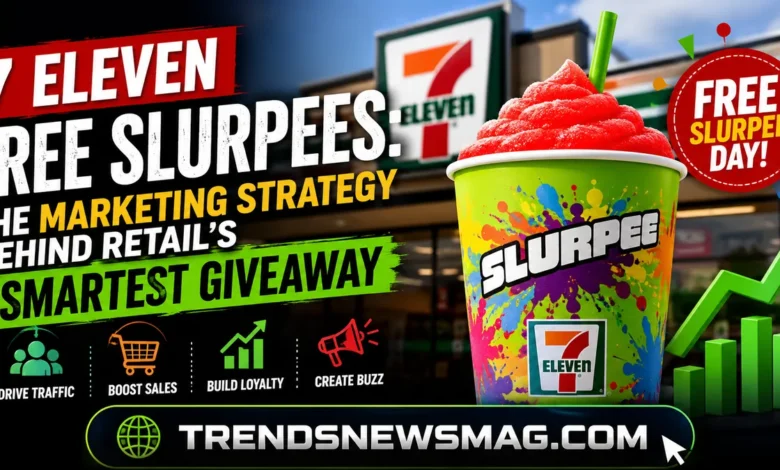
Every business school case study loves a clean example of low-cost marketing producing outsized returns, and few retail promotions illustrate that principle as clearly as 7 Eleven free Slurpees. On the surface, it looks like a simple, feel-good giveaway: walk into a store on July 11, fill a cup with a frozen drink, walk out without paying a cent. But underneath that simplicity sits a genuinely sophisticated business strategy, one that has quietly generated millions of dollars in foot traffic value, earned media coverage, and brand loyalty for more than two decades without the company needing to spend heavily on traditional advertising. For anyone interested in retail strategy, customer acquisition, or brand building, this promotion is worth studying far more closely than its “free drink” framing suggests.

This article breaks down the business mechanics behind the giveaway, why the company keeps investing in it year after year, how it fits into 7-Eleven’s broader competitive positioning, and what other retailers and business owners can actually learn from a promotion that costs relatively little but delivers consistent, measurable returns. Whether you’re a business owner looking for inspiration, a marketing student studying real-world case examples, or simply someone curious about the strategy behind a promotion you’ve participated in for years, there’s a lot happening beneath the surface of this frozen drink giveaway.
The Core Business Logic Behind Giving Away Millions of Free Drinks
It’s fair to wonder why a massive retail chain would voluntarily give away a product for free on such a large scale every single year. The answer comes down to foot traffic and brand loyalty, two of the most valuable currencies in retail. Every person who walks in for a free Slurpee is also walking past aisles of snacks, drinks, lottery tickets, and gas pumps, and a meaningful percentage of those visitors end up making an additional small purchase while they’re there. The free drink functions less like charity and more like a highly effective, low-cost customer acquisition tool that happens to generate genuine goodwill in the process, which is exactly the kind of dual-purpose marketing move that business strategists tend to admire.
There’s also a broader strategic context worth understanding. 7-Eleven has been pushing its Slurpee brand as it looks toward the future of its US business, particularly as its Japanese parent company has announced plans to close hundreds of underperforming convenience stores while the chain works to compete with newer rivals known for offering more premium food and drink options. In that competitive landscape, a beloved, decades-old tradition like 7 Eleven free Slurpees becomes even more valuable as a differentiator. Competing chains simply don’t have a promotion with this much built-in brand recognition, and leaning into it harder during a period of broader business restructuring makes strategic sense. It reminds existing customers why they’ve stuck around for years and gives newer or lapsed customers a low-risk reason to walk back through the door.
The anniversary tie-in this year adds another layer to the strategy. By pairing the free giveaway with a 60th anniversary celebration and a limited-edition flavor collaboration with Mountain Dew, the company effectively turns a single-day promotion into a multi-week marketing campaign, since the special flavor runs from late June through late August. That extended window keeps the momentum going well past July 11 itself, encouraging repeat visits from customers who want to try the new flavor even after the free giveaway has ended. From a business standpoint, that’s a textbook example of stretching a single promotional moment into sustained revenue-generating traffic.
Why This Counts as a Customer Acquisition Strategy, Not Just a Giveaway
Marketing teams spend enormous budgets trying to get new customers through the door, often through paid ads, discount codes, or referral programs that cost money regardless of whether they convert. 7 Eleven free Slurpees flips that model. Instead of paying to advertise the brand, the company creates a genuinely desirable free product and lets word-of-mouth, local news coverage, and social media do the advertising work for free. Local news stations across the country run “how to get your free Slurpee” segments as reliable, feel-good summer content, and national outlets follow suit with their own explainer articles. That earned media coverage, generated organically because the story itself has broad appeal, would cost an enormous amount if the company had to purchase equivalent airtime or ad placements.
This is a subtle but important distinction for any business owner studying the model. A paid advertisement interrupts someone’s day to sell them something. A well-designed giveaway like this one gets covered as news, shared voluntarily by customers on social media, and talked about in casual conversation, all of which carries far more credibility than a paid ad ever could. When a journalist writes an article about where to get your free small Slurpee, that’s functionally free advertising delivered with the implicit trust of a news outlet rather than the skepticism people bring to sponsored content. Few brands manage to convert a single-day product giveaway into a recurring media cycle this reliably.
The scale of the underlying business makes this strategy even more effective. Globally, 7-Eleven sells approximately 14 million Slurpees per month, amounting to over 168 million annually, and as of early 2026 the chain operates more than 80,000 stores across 19 countries, making it the largest convenience store chain in the world. That scale means the cost of the giveaway, spread across such a massive operational footprint, is a relatively small line item compared to the overall beverage business it supports and promotes. Smaller businesses studying this model should note that the size of the giveaway matters less than the consistency and story behind it; a well-executed, smaller-scale version of the same principle can work for a local business with a fraction of the budget.
How the Promotion Reinforces Brand Identity and Loyalty
Beyond driving one-day traffic, 7 Eleven free Slurpees plays a longer strategic role in reinforcing brand identity. The date itself is not arbitrary. July 11, written numerically as 7/11, mirrors the company’s own name, which makes the entire event feel like a birthday celebration the brand throws for itself and then invites the public to join. That kind of built-in symbolism is difficult for competitors to replicate, since it’s tied directly to the company’s name and founding identity rather than a generic calendar date a competitor could simply copy.
The tradition dates back to 2002, when it launched as a thank-you gesture to loyal customers, and it has since become one of the most reliable free treats on the retail calendar. Twenty-plus years of consistency is precisely what separates a genuine brand-building strategy from a short-lived marketing stunt. According to Brandon Brown, Senior Vice President of Fresh Foods and Beverages at 7-Eleven, “Slurpee Day is one of our most beloved traditions, and this year feels even more special as we celebrate 60 years of the iconic frozen beverage.” That statement reflects a company treating the promotion not as a one-off expense but as a core part of its long-term brand strategy, something worth reinvesting in year after year rather than scaling back once initial novelty fades.
This year’s business strategy also leans into influencer and lifestyle marketing to widen the promotion’s reach beyond its traditional audience. To mark the diamond anniversary, 7-Eleven partnered with reality television personality JaNa Craig to promote a lighthearted “Slurpee Date” concept, encouraging couples to skip traditional dinner reservations and instead bond over splitting a frozen drink together. That kind of repositioning shows a mature brand actively evolving its marketing playbook, using an existing beloved tradition as a foundation to reach younger, social-media-driven audiences rather than relying solely on the original giveaway to sustain interest indefinitely.
The Operational Side: How the Giveaway Actually Works
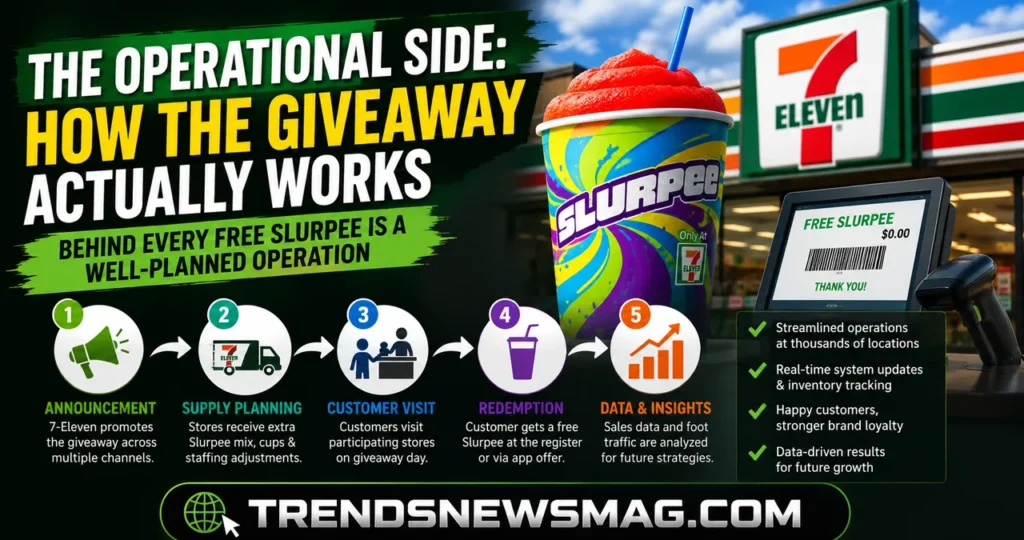
Understanding the operational mechanics behind 7 Eleven free Slurpees helps explain why the strategy works as smoothly as it does at scale. Participating 7-Eleven, Speedway, and Stripes locations nationwide hand out a free small Slurpee to anyone who walks in, with no purchase required, and the offer runs specifically on July 11 while supplies last. Because the chain operates on a franchise model in much of the country, individual store owners retain some discretion over participation, which means corporate headquarters is essentially relying on a distributed network of independent operators to execute a centrally designed campaign, a logistical challenge that larger franchise businesses need to plan around carefully.
There’s also a layered incentive structure built into the promotion that rewards deeper engagement. Customers who spend at least twenty dollars through the 7-Eleven app can score a free large Slurpee, giving early birds a head start on the celebration a full day ahead of the main event. That’s a smart layering of incentives from a business design perspective. The company drives app downloads, captures purchase data, and encourages spending, all while rewarding that behavior with an upgraded version of the same free product everyone else receives for free the next day. Any business considering a similar loyalty mechanic can learn from this structure: give away the base product freely to maximize reach, then create a slightly better version of that same reward for customers willing to engage more deeply with your platform.
This year’s celebration also includes small-scale, high-touch marketing activations layered on top of the mass giveaway. The chain launched a “Slurpee Date” promotion at four select stores nationwide, featuring a photo bench, an on-site photographer, and limited-edition bedazzled double straws, with locations in New Jersey, California, Ohio, and Texas. These boutique activations don’t move the needle in terms of raw giveaway volume, but they generate exactly the kind of shareable, photogenic content that performs well on social media, extending the campaign’s visibility well beyond the people who physically attended those four locations.
Comparing the Strategy to Competitor Promotions
Part of what makes 7 Eleven free Slurpees a stronger case study than most retail giveaways is how it stacks up against competitor efforts. Other convenience store chains like Circle K, known for its own Froster frozen drinks, often run promotions that align with the spirit of Free Slurpee Day, while Sonic Drive-In frequently offers deals on its own slush and frozen drink options during the summer months. These competing promotions tend to be regionally focused or tied to app-specific deals rather than the blanket, no-purchase-necessary structure that defines the 7-Eleven giveaway, which partly explains why the original tends to dominate headlines and social media buzz every year while competitor promotions receive comparatively modest coverage.
| Business Factor | 7 Eleven Free Slurpees | Typical Competitor Promotion |
|---|---|---|
| Structure | No purchase necessary, nationwide | Often app-only or regional |
| Consistency | Same date, every year since 2002 | Frequently changes or is one-off |
| Media coverage | National and local news cycle | Limited, mostly social media |
| Brand tie-in | Date mirrors company name (7/11) | Rarely tied to brand identity |
| Scale | 80,000+ stores across 19 countries | Regional footprint |
Longevity is the biggest differentiator here. A promotion that ran once or twice and quietly disappeared wouldn’t generate the same anticipation. Because this giveaway has run reliably for over two decades, it has become something people build into their summer routines the same way they might plan around a local fireworks show or a farmers market opening weekend. That kind of consistency is difficult for newer promotions to replicate, since trust and habit take years to build, not a single viral marketing push, which is precisely why competitors have struggled to create an equivalent moment of their own.
Lessons Small and Mid-Sized Businesses Can Take From This Model
You don’t need 80,000 stores to apply the underlying principles that make 7 Eleven free Slurpees work as a business strategy. The first lesson is picking a date or moment tied naturally to your brand identity, the same way 7/11 mirrors the company name, rather than an arbitrary promotional date that customers have no reason to remember. A local business could just as easily tie a giveaway to its founding date, a numerical quirk in its name, or a milestone anniversary, giving the promotion built-in meaning rather than feeling like a generic discount event.
The second lesson is consistency over novelty. It’s tempting for smaller businesses to constantly reinvent their promotions in search of something flashier, but the compounding value of running the exact same, reliable offer at the exact same time every year is what eventually turns a promotion into a tradition customers actively plan around. A once-a-year, dependable giveaway, even a modest one, can outperform a series of scattered, unpredictable discounts over time simply because customers learn to trust and anticipate it.
The third lesson involves layering incentives rather than offering a single flat promotion. The base offer, a free small Slurpee, reaches the widest possible audience with zero friction, while the app-based twenty-dollar spending threshold for a free large Slurpee rewards more engaged customers without excluding anyone from participating at the entry level. Businesses of any size can replicate this layered structure: offer something free and accessible to everyone, then create a slightly enhanced version of that reward for customers willing to spend more or engage more deeply with your brand.
The Long-Term Payoff: Why the Company Keeps Reinvesting
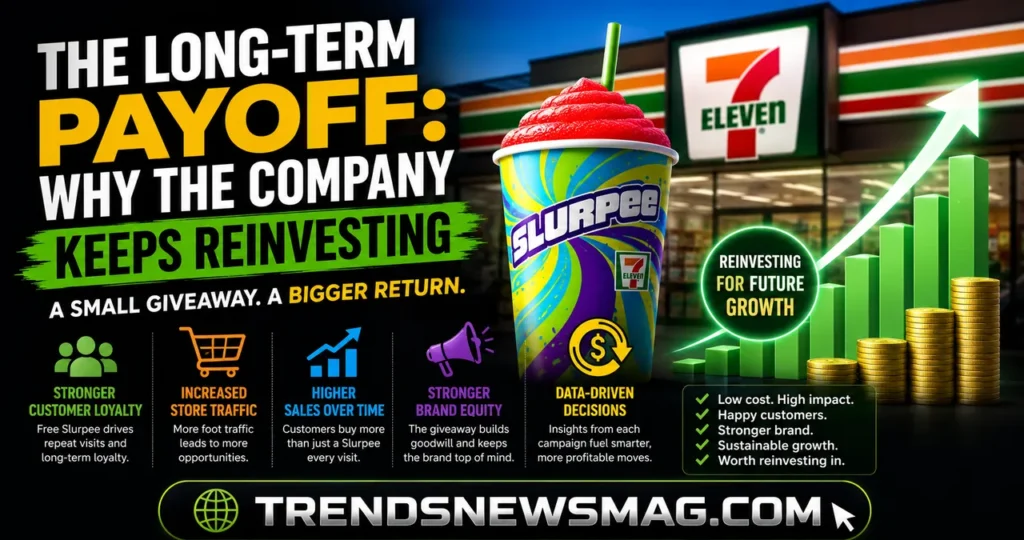
Plenty of retail promotions launch with fanfare and quietly disappear within a few years once the novelty wears off or the marketing budget shifts elsewhere. The fact that this particular giveaway has not only survived but expanded over more than two decades says something important about what makes a promotion genuinely sustainable rather than a short-lived gimmick. Part of it is the low barrier to entry. Anyone can walk in and participate regardless of income level, loyalty status, or prior purchase history, which makes it one of the more genuinely inclusive retail promotions still running at a national scale, and inclusivity at that level tends to translate into broader brand affection over time.
There’s also a compounding data and habit-formation benefit that’s easy to overlook. Every year a customer participates in 7 Eleven free Slurpees, the brand reinforces itself a little further into that person’s seasonal routine, similar to how people associate certain holidays with specific foods or rituals without ever consciously deciding to form that association. Over enough years, that repeated exposure becomes a durable competitive advantage that’s genuinely difficult for a rival chain to dislodge, even with aggressive discounting or flashier one-off campaigns.
Finally, milestone years like this one, marking sixty years of the drink and ninety-nine years of the company, function as natural reinvestment points where the business can justify additional marketing spend, new flavor development, and influencer partnerships under the umbrella of an already-trusted tradition. Rather than launching a brand-new campaign from scratch, the company gets to build on decades of accumulated goodwill, which is a far more capital-efficient way to generate buzz than starting fresh each year. That efficiency is ultimately why the promotion continues to make business sense even as the broader convenience store industry faces increased competition and store closures.
Conclusion
Viewed purely as a giveaway, 7 Eleven free Slurpees might look like a simple, feel-good summer tradition. Viewed as a business strategy, it’s a masterclass in low-cost customer acquisition, earned media generation, and brand loyalty reinforcement, sustained consistently for more than two decades. The promotion succeeds because it ties directly into brand identity through its date, layers incentives to reward deeper engagement without excluding casual participants, and generates a self-sustaining media cycle that would cost a fortune to replicate through paid advertising alone. For business owners and marketers, the real value in studying this promotion isn’t the free drink itself, but the underlying structure: consistency, brand-aligned timing, and a willingness to treat a giveaway as a long-term investment rather than a short-term expense.
As the convenience store industry faces increasing competition from premium rivals and shifting consumer habits, promotions like this one demonstrate why deeply rooted, brand-aligned traditions can outperform flashier, short-lived campaigns. For further reading on the company’s current strategy and official announcements, you can visit 7-Eleven’s corporate newsroom.
FAQs
Why does 7-Eleven give away free Slurpees every year instead of running a paid ad campaign?
The company treats the giveaway as a form of highly efficient marketing rather than a pure cost. Every visitor who comes in for a free Slurpee walks past other purchasable items, and a meaningful share end up buying something additional, effectively turning the promotion into a self-funding customer acquisition channel. On top of that, the story generates free media coverage from local and national outlets every year, delivering advertising value that would be extremely expensive to buy outright through traditional paid campaigns.
How does the 7 Eleven free Slurpees promotion fit into the company’s competitive strategy?
As the convenience store industry becomes more competitive, with newer chains offering premium food and drink options, 7-Eleven leans on this decades-old tradition as a differentiator that’s difficult for rivals to copy. The promotion’s date is tied directly to the company’s own name, giving it a built-in identity advantage that a generic competitor promotion simply cannot replicate. It also reinforces brand loyalty during a period when the company is closing some underperforming locations and needs strong reasons for customers to keep choosing 7-Eleven over emerging competitors.
Is this kind of giveaway strategy something smaller businesses can realistically copy?
Yes, and that’s part of what makes it a useful business case study. The core principles, tying a promotion to something meaningful in your brand identity, running it consistently at the same time every year, and layering a modest incentive for deeper customer engagement, can be scaled down for a local business with a much smaller budget. The specific execution will look different at a smaller scale, but the underlying logic of building a recognizable, reliable tradition rather than constantly changing promotions applies just as well to a neighborhood business as it does to a chain with tens of thousands of locations.
Does the free giveaway actually generate measurable business value, or is it just goodwill?
Both, and that combination is exactly why the strategy has persisted for over two decades. The goodwill component builds long-term brand affection and habit formation, while the measurable value comes from increased foot traffic, incremental purchases made during the same visit, app downloads tied to the bonus large-size offer, and the earned media coverage that would otherwise require significant advertising spend to achieve. Businesses evaluating similar promotions should expect the return to show up across multiple channels rather than a single easily isolated metric.
What can marketing teams learn from how 7-Eleven layers its incentives around this promotion?
The structure rewards different levels of customer engagement without excluding anyone. The base offer, a free small Slurpee with no purchase necessary, is available to literally anyone who walks in, maximizing reach and inclusivity. Layered on top of that, customers willing to spend twenty dollars through the app can unlock a free large Slurpee a day early, rewarding deeper engagement without gatekeeping the core promotion. This tiered approach, accessible entry point paired with an enhanced reward for more invested customers, is a flexible model that marketing teams across industries can adapt to their own loyalty and acquisition strategies.
Trending Today: [Cathie Wood Buys Tech Stock]