Xendit Work GamificationSummit: How Digital Payments, Gamification, and Employee Engagement Are Shaping the Future of Work

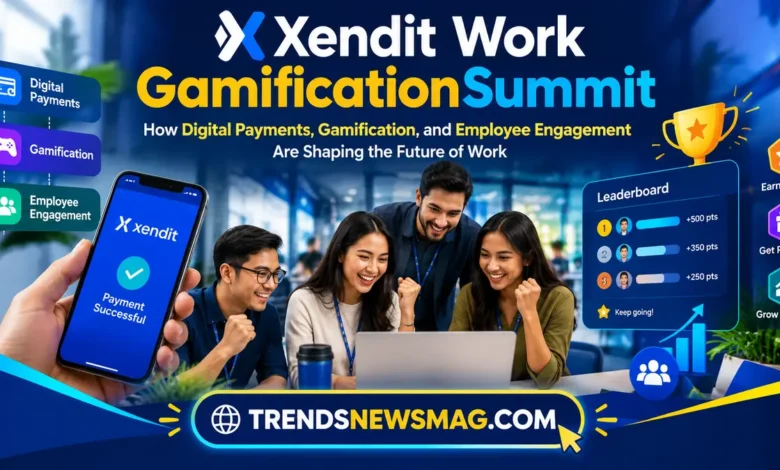
The future of work is being shaped by two powerful forces: digital financial technology and the growing demand for more engaging, rewarding workplace experiences. Businesses are no longer competing solely on the quality of their products or the efficiency of their operations. They are also competing on how effectively they motivate employees, retain customers, simplify transactions, and create meaningful digital experiences. This shift has brought fintech innovation, gamification, and workplace transformation into the same strategic conversation.


The term xendit work gamificationsummit brings these ideas together in an interesting way. Xendit represents the development of digital payment infrastructure across Southeast Asia, while workplace gamification focuses on using game-inspired mechanics to encourage participation, improve performance, and make routine activities more engaging. A gamification summit, meanwhile, suggests a forum for exploring how these strategies can be applied across business, technology, education, finance, and human resources.
Although these concepts are related, it is important to distinguish their individual roles. Xendit is a real fintech company, workplace gamification is an established business practice, and a summit is an event format. Without verified event information, the phrase should not be interpreted as the official name of a confirmed Xendit event or an existing company program.
Understanding the relationship between these topics offers valuable insights for entrepreneurs, business leaders, software developers, human resource professionals, and digital marketers. It also reveals how payment technology and behavioral design can work together to create more efficient, engaging, and customer-focused organizations.
Understanding the Meaning Behind Xendit Work GamificationSummit
The phrase xendit work gamificationsummit can be understood as a search topic connecting fintech innovation, workplace productivity, and gamification-driven business strategies. People searching for this combination may be interested in Xendit’s technology, the application of game mechanics in professional environments, or discussions about digital transformation at business events.
The first component, Xendit, refers to a financial technology company that provides payment infrastructure for businesses. Its services help organizations accept and manage digital payments through different channels, depending on their market and product requirements. The second component, work gamification, describes the use of game-inspired features in professional activities. These may include progress tracking, achievement systems, team challenges, recognition programs, and rewards tied to meaningful goals. The final component, summit, commonly describes a gathering where professionals exchange ideas, discuss emerging trends, and explore practical solutions.
Together, these concepts suggest a broader business question: how can companies combine efficient digital transactions with engaging experiences for employees and customers?
Consider an online retailer that uses digital payment technology to process customer purchases while maintaining a gamified employee training program. Customer transactions become easier to complete, while employees receive structured feedback and recognition as they learn new skills. Although these are separate systems, both contribute to the same organizational objective: creating a smoother, more effective experience for everyone involved.
The distinction matters for readers and businesses. Exploring the phrase as a connected topic is useful for research and strategic planning, but claims about a specific summit, its speakers, its dates, or an official partnership require confirmation from reliable sources.
What Is Xendit and Why Does It Matter in Digital Payments?
Xendit is a financial technology company founded in Indonesia that provides payment infrastructure for businesses operating in Southeast Asia. Its services are designed to help companies accept payments and manage financial transactions through digital channels. Depending on the country and the services available, payment methods can include bank transfers, virtual accounts, electronic wallets, cards, and other locally relevant options.
For businesses operating in markets with diverse payment preferences, this infrastructure can reduce the complexity of integrating multiple payment methods. Instead of developing and maintaining separate connections for every payment channel, a business may use a payment platform to centralize parts of its transaction processing. The exact capabilities depend on the provider’s product offering, local regulations, and the merchant’s technical setup.
The commercial value extends beyond accepting money. Digital payment systems can support transaction monitoring, payment reconciliation, customer checkout experiences, and operational reporting. These functions are particularly useful for subscription businesses, online marketplaces, digital service providers, and retailers handling large numbers of transactions.
Imagine a small online education company serving customers in Indonesia and the Philippines. Its students may prefer different ways to pay, and a checkout process designed for just one payment method could discourage potential buyers. By integrating suitable payment options, the company can make enrollment more convenient and reduce friction during the purchasing process.
However, payment infrastructure does not automatically improve every aspect of a business. Companies still need reliable customer support, effective fraud prevention, clear refund policies, accurate financial reporting, and appropriate security controls. Payment acceptance, settlement timing, transaction fees, and supported markets must also be evaluated before choosing a provider.
The larger lesson is that fintech platforms provide the foundation for digital commerce. Businesses create the value by integrating that foundation into well-designed customer journeys and reliable operating processes.
What Workplace Gamification Actually Means
Workplace gamification is the application of game-design principles to activities that are not games. Its purpose is to make tasks more engaging, provide clearer feedback, encourage progress, and support desired behaviors. Rather than turning an entire workplace into a competition, effective gamification identifies specific activities where structured feedback and meaningful incentives can improve participation or learning.
Common examples include employee training programs with progress indicators, sales teams that track milestones, customer service departments that recognize quality improvements, and onboarding systems that reward completion of important learning activities. A company might also introduce team-based challenges to encourage collaboration between departments.
Gamification works best when employees understand what they are trying to achieve and why the activity matters. A progress bar showing completed training modules can help someone recognize improvement. A badge awarded after mastering a difficult process can provide a sense of accomplishment. A team challenge may encourage colleagues to share knowledge rather than work in isolation.
Yet these mechanics are not inherently motivating. A poorly designed points system can encourage employees to chase numbers instead of improving their actual performance. Public leaderboards may embarrass people who have fewer opportunities, while financial incentives can lead to rushed work or manipulated results.
The difference between useful gamification and superficial game mechanics lies in the underlying design. A company should begin with a real organizational problem, identify the behavior that would help solve it, and select game-inspired elements that support that behavior.
As a practical principle, recognition should reinforce meaningful progress, not simply reward visible activity. An employee who resolves a complex customer issue thoughtfully may create more value than someone who closes twice as many simple tickets. A strong gamification program accounts for that difference.
How Xendit Work GamificationSummit Connects Fintech and Employee Engagement
The connection between digital payments and workplace gamification becomes clearer when both are viewed as components of a larger digital business ecosystem. Payment infrastructure helps organizations move money, while gamification can influence how people interact with software, complete tasks, and respond to incentives.
The phrase xendit work gamificationsummit provides a useful framework for exploring this intersection. It invites businesses to consider how financial technology, behavioral psychology, employee experience, and digital product design might support a common goal: improving measurable business outcomes without sacrificing trust or usability.
For example, a company could use a digital payment platform to manage transactions associated with an employee incentive program. Employees might receive a bonus after completing a verified training pathway or achieving a quality target. The payment system could support the disbursement process, while the gamification platform tracks progress and verifies eligibility.
This is a conceptual example rather than a claim about a specific Xendit feature or partnership. In a real implementation, the business would need to establish the appropriate payment workflow, verify participant eligibility, address tax and employment obligations, and protect personal and financial information.
Another application involves customer loyalty. An online marketplace might award points for completed purchases, helpful product reviews, or participation in educational activities. The loyalty system would calculate rewards, while payment infrastructure would handle purchases and potentially support certain payout or refund workflows where the provider offers the relevant capabilities.
These systems should remain logically distinct. A payment processor does not automatically provide employee gamification, and a gamification platform does not necessarily handle regulated financial transactions. Integration requires suitable APIs, secure data exchange, clear system responsibilities, and careful testing.
When organizations understand these boundaries, they can build systems that complement each other rather than forcing one technology to perform a job it was not designed to handle.
The Role of Gamification Summits in Modern Business Strategy
Business summits provide opportunities for professionals to explore new technologies, exchange practical experiences, and evaluate competing approaches to common challenges. A summit focused on gamification may bring together product designers, behavioral researchers, human resource leaders, educators, marketers, and software developers.
These discussions are valuable because gamification crosses several disciplines. A human resources specialist may focus on employee motivation, while a product manager considers retention and user engagement. A behavioral scientist may examine intrinsic motivation, and a technology leader evaluates whether the required features can be implemented securely at scale.
The most productive events move beyond demonstrations of badges, points, and leaderboards. They examine the conditions under which game mechanics work, the risks of poorly designed incentives, and the evidence needed to determine whether an initiative delivers lasting benefits.
For businesses exploring xendit work gamificationsummit as a research topic, the summit concept is especially relevant to the question of implementation. It encourages decision-makers to examine how technology, workplace culture, financial systems, and human behavior interact.
A useful summit session might compare two employee training approaches. The first requires staff to complete a series of mandatory lessons. The second combines the same lessons with progress indicators, realistic simulations, optional challenges, and feedback from supervisors. Participants could evaluate completion rates, knowledge retention, employee satisfaction, and performance after training.
The objective would not be to establish that gamification always outperforms conventional training. Instead, it would be to identify which design elements improve learning, for whom they work, and what conditions are necessary for success.
Readers should verify event-specific details through official organizer announcements before treating a particular summit, partnership, or speaker lineup as confirmed.
Practical Applications of Workplace Gamification Across Industries
Gamification can be adapted to different industries, but the design must reflect each industry’s objectives, workforce characteristics, and operational constraints. A strategy that works for a retail sales team may be inappropriate for a hospital or financial institution.
In retail, employees may benefit from structured product-learning challenges, customer service simulations, and team recognition based on customer satisfaction. These systems can help staff develop product knowledge and improve service quality without turning every customer interaction into a race.
In financial services, training programs can use simulated scenarios to help employees recognize fraud patterns, understand compliance requirements, and practice customer communication. Employees can earn recognition for demonstrating accurate judgment and following appropriate procedures. Real financial decisions, however, must remain subject to established controls and professional oversight.
In education, gamified learning can make difficult concepts more approachable. Students may progress through lessons, complete challenges, receive immediate feedback, and revisit areas where they need improvement. Effective systems reward mastery rather than mere attendance or speed.
In software development, teams may use progress tracking and recognition to encourage documentation, knowledge sharing, mentoring, and the resolution of technical debt. Rewarding only the number of tasks completed can be counterproductive because software quality depends on complexity, testing, collaboration, and long-term maintainability.
The following table summarizes potential applications and the outcomes organizations should evaluate.
| Industry | Gamification application | Desired outcome | Important safeguard |
|---|---|---|---|
| Retail | Product knowledge challenges | Better customer service | Avoid pressuring customers |
| Financial services | Compliance simulations | Improved risk awareness | Preserve regulatory controls |
| Education | Mastery-based learning | Stronger knowledge retention | Reward understanding, not speed |
| Technology | Collaboration milestones | Better teamwork and documentation | Avoid superficial productivity metrics |
| Customer support | Quality-based recognition | Improved resolution quality | Account for case complexity |
| E-commerce | Loyalty challenges | Greater customer engagement | Make reward terms transparent |
| Human resources | Onboarding milestones | Faster employee integration | Respect different learning speeds |
These examples demonstrate why successful gamification depends on context. The same points system can encourage learning in one setting and create unhealthy competition in another.
Organizations should also consider accessibility, cultural differences, privacy, and the possibility that employees may have unequal access to the activities being measured. Fairness is not an optional feature; it is a fundamental requirement for a credible program.
Designing a Gamification Strategy That Produces Measurable Results
The first step in developing a workplace gamification strategy is to define the business problem. Leaders should avoid starting with a feature such as a leaderboard and then searching for a reason to use it. Instead, they should identify a specific issue, such as low training completion, inconsistent service quality, poor documentation, or limited participation in professional development.
Once the objective is clear, the organization should identify the behavior most likely to improve the outcome. If customer service quality is the problem, the target behavior might involve resolving issues accurately, documenting solutions, and communicating clearly. If onboarding is the challenge, the target could be completing essential learning activities and demonstrating competence in realistic tasks.
The next step is to select appropriate mechanics. Progress indicators can make a long process easier to understand. Achievement milestones can recognize mastery. Team challenges can support collaboration. Feedback can help employees correct mistakes before those mistakes affect customers.
Rewards should match the behavior being encouraged. Some employees value public recognition, while others prefer private feedback, professional development opportunities, additional autonomy, or tangible incentives. Offering different forms of recognition can make the program more inclusive.
Measurement is equally important. Before launch, managers should establish baseline performance and determine how success will be evaluated. A program designed to improve training should measure knowledge retention and subsequent job performance, not simply the number of lessons completed.
A practical implementation might follow this sequence:
| Stage | Main activity | Evidence of progress |
|---|---|---|
| Discovery | Identify the operational problem | Clear baseline and business objective |
| Design | Choose target behaviors and mechanics | Documented rules and success criteria |
| Pilot | Test with a limited group | Participation and qualitative feedback |
| Evaluation | Compare outcomes with baseline | Measurable improvement and risk assessment |
| Refinement | Adjust rewards and rules | Better usability and fairer participation |
| Expansion | Extend the validated approach | Consistent results across teams |
A pilot should be large enough to reveal practical issues but limited enough to make adjustments manageable. During the trial, managers should monitor unexpected behavior, accessibility problems, employee concerns, and possible manipulation of performance metrics.
If results improve, the company should still ask why. The change may come from better feedback, increased managerial attention, clearer expectations, or the novelty of the program rather than gamification alone. Understanding the mechanism helps leaders decide whether the improvements are likely to last.
Integrating Digital Payments Into Reward and Incentive Programs
Digital payments can support certain gamification programs when rewards involve money, reimbursements, prizes, or other eligible disbursements. The challenge is to design a process that connects verified achievements with accurate payment instructions while protecting employees and the organization.
Consider a regional company that introduces a professional development program. Employees complete approved courses, pass assessments, and demonstrate their skills through practical assignments. The company offers a financial reward to eligible participants who satisfy the published criteria.
A well-designed system would separate achievement verification from payment execution. The learning platform would record completed requirements, an authorized process would validate eligibility, and the finance system would approve the relevant payment. A suitable payment provider could then facilitate the transaction according to its available services and applicable requirements.
This separation is important because a gamification system should not be able to issue payments merely because a user changes a progress indicator or manipulates an activity record. Rewards should depend on trusted evidence and approved business rules.
When considering xendit work gamificationsummit from an implementation perspective, organizations should examine whether their proposed reward workflow is supported in the relevant country and account configuration. They should verify transaction limits, applicable fees, settlement schedules, supported payment methods, refund handling, and the documentation required for business verification.
They must also consider local employment law, taxation, consumer protection, and data protection obligations. A cash incentive can have different legal and accounting implications from a gift card, nonfinancial recognition, or reimbursement.
Not every gamification program needs a financial reward. Badges, professional certifications, mentoring opportunities, additional responsibilities, and team recognition may be more appropriate for some objectives. In many cases, meaningful feedback and a clear path toward mastery are more sustainable than repeated cash incentives.
The strongest approach treats payments as one possible component of a broader reward strategy, not as a substitute for thoughtful program design.
The Psychology Behind Effective Gamification
Gamification draws on established ideas from motivation research, behavioral psychology, learning science, and game design. Its effectiveness depends partly on how a system influences people’s sense of progress, competence, autonomy, and social connection.
One important concept is feedback. People often struggle to stay engaged when they cannot tell whether they are making progress. Clear milestones can make improvement visible and help users identify what to do next. In workplace training, feedback is particularly useful when it explains why an answer is correct or incorrect rather than simply awarding points.
A second concept is competence. Employees are more likely to benefit from challenges that are demanding but achievable. If tasks are too easy, the experience becomes repetitive. If they are consistently too difficult, participants may disengage. A well-designed program gradually increases complexity as users develop their skills.
Autonomy is also important. People generally respond differently when they feel they have control over their learning and work. Giving employees choices between relevant challenges, learning paths, or development activities can make a program feel less coercive.
Social recognition can encourage participation, but its effects vary. Some people enjoy public leaderboards and friendly competition. Others find them stressful or distracting. Offering private progress tracking alongside optional team-based recognition can accommodate different preferences.
Research on motivation also highlights the risk of overreliance on external rewards. If an employee already values a task, introducing aggressive financial incentives or constant competition may change how the task is perceived. The result can be reduced intrinsic motivation, particularly when the reward feels controlling or undermines professional judgment.
For this reason, organizations should treat gamification as a way to improve the structure of work, not as a technique for extracting more activity from employees. The aim is to help people understand goals, develop skills, receive useful feedback, and recognize meaningful achievements.
Technology, APIs, and the Infrastructure Behind Gamified Experiences
Behind a polished gamification experience is a system that must track activities, verify achievements, manage permissions, and communicate with other business applications. When payments are involved, the technical requirements become more demanding because the system must also protect financial transactions and maintain reliable records.
A typical architecture may include a user interface, an application server, a database, a rules engine, an authentication system, and integrations with human resources or learning management software. A separate payment integration may process approved financial transactions when the selected provider supports the required workflow.
The rules engine determines whether a participant has satisfied a particular requirement. For example, completing a training video might count toward progress, but receiving a reward may require passing an assessment and obtaining supervisor approval. Separating these conditions prevents a simple activity record from automatically triggering a high-value transaction.
APIs allow systems to exchange information using defined interfaces. However, API integration requires more than connecting two endpoints. Developers must consider authentication, permission scopes, input validation, error handling, retries, rate limits, monitoring, and version compatibility.
Payment-related workflows also require safeguards against duplicate transactions. An application may retry a request after a network failure, even if the original transaction was already processed. Idempotency mechanisms, where supported, help prevent repeated requests from creating unintended duplicate payments.
Audit logs are equally important. Organizations should be able to determine who approved a reward, what eligibility criteria were applied, which transaction was submitted, and how its status changed. Access to these records must be controlled according to business needs and privacy requirements.
For teams evaluating xendit work gamificationsummit as a technology topic, the key insight is that integration quality matters as much as the user-facing experience. A compelling interface cannot compensate for unreliable payment processing, weak authorization controls, or inconsistent achievement records.
Common Mistakes Businesses Should Avoid
One of the most common mistakes is confusing activity with achievement. An employee may complete many tasks without improving the quality of their work. A customer may click through several promotional challenges without becoming more loyal. Metrics should reflect the intended outcome rather than the easiest behavior to count.
Another mistake is making rewards too competitive. Leaderboards can create excitement, but they can also encourage employees to withhold information, avoid helping colleagues, or pursue easy wins. Team-based goals and recognition for collaboration may produce healthier results when success depends on shared effort.
Poorly defined rules create additional problems. If participants do not understand how points are calculated, what qualifies for a reward, or how disputes are handled, the program can lose credibility. Transparent criteria and a clear appeals process help protect trust.
Businesses should also avoid introducing unnecessary complexity. Employees already use multiple systems for communication, scheduling, reporting, and training. A gamification layer that requires excessive data entry or constant notifications can become another administrative burden instead of a productivity tool.
Privacy requires particular attention. Monitoring employee behavior can reveal sensitive information about performance, working patterns, and individual circumstances. Organizations should explain what information is collected, why it is necessary, who can access it, and how long it is retained.
Finally, companies should not assume that every successful pilot will scale automatically. A program that works for a small team may produce different results across regions, departments, and cultures. Reward preferences, competitive norms, access to technology, and job responsibilities can vary significantly.
The solution is to evaluate gamification as an ongoing business process. Regular reviews, participant feedback, transparent governance, and carefully selected metrics make it easier to identify problems before they become embedded in the organization.
Measuring the Business Impact of Gamification
Organizations need credible evidence to determine whether gamification justifies its cost. Participation rates are useful, but they are only the beginning. A program can attract considerable attention without producing a meaningful improvement in business performance.
The most appropriate metrics depend on the original objective. A training initiative might measure assessment scores, knowledge retention after several weeks, and the frequency of errors during actual work. A customer support program might evaluate customer satisfaction, first-contact resolution, repeat complaints, and the quality of case documentation.
For an e-commerce loyalty program, businesses could examine repeat purchase rates, customer retention, average order value, reward redemption, and the incremental margin generated by participating customers. These figures should be interpreted carefully because repeat purchases may reflect seasonal demand, discounts, or other marketing activities rather than gamification.
Financial analysis should account for both direct and indirect costs. These may include software licensing, implementation, integration, staff training, reward expenses, maintenance, and the time employees spend participating. A program that improves engagement but consumes excessive management time may not deliver a positive overall return.
Where feasible, businesses should compare participants with a similar group that does not receive the intervention. Randomized trials offer stronger evidence when practical and ethical, while carefully designed comparisons and before-and-after analysis can provide useful alternatives. Researchers should also account for differences in job roles, experience, workload, and access to resources.
A simple return-on-investment calculation compares the estimated net benefit with the total cost of the program. However, leaders should avoid assigning speculative financial values to vague improvements in morale or engagement. Qualitative feedback is valuable, but it should complement rather than replace measurable evidence.
The goal is not to prove that gamification is effective in every situation. It is to identify where it creates measurable value, where it has little impact, and where a simpler solution would work better.
The Future of Fintech and Gamification in Southeast Asia
Southeast Asia offers a significant setting for the convergence of digital payments and engaging digital experiences. The region includes diverse markets, languages, regulatory environments, payment preferences, and levels of digital adoption. Businesses seeking regional growth must account for these differences rather than assume that a single product design will work everywhere.
Digital payment infrastructure can help businesses reach customers through locally relevant transaction methods. Gamification can help explain product features, encourage learning, and support engagement with services that might otherwise feel unfamiliar or complicated. When used responsibly, the combination can make digital experiences easier to understand and navigate.
For instance, a financial education platform could provide interactive lessons about budgeting, savings, and responsible borrowing. Users might progress through realistic scenarios, receive feedback on their decisions, and unlock additional educational material as their knowledge develops. A payment integration could support eligible purchases or transactions, but the educational experience should not encourage unnecessary spending or risky financial behavior.
Workplace applications may also evolve as businesses adopt more sophisticated analytics, personalized training, and integrated employee platforms. Systems could recommend relevant learning activities based on demonstrated skill gaps, while managers use aggregate results to identify where additional support is needed.
These opportunities bring important responsibilities. Personalized experiences must respect privacy, avoid discriminatory outcomes, and provide meaningful choices. Financial incentives must be transparent, and businesses should not use gamification to pressure people into unsuitable financial products or excessive transactions.
For readers researching xendit work gamificationsummit, the broader regional trend is worth examining through official fintech announcements, industry research, regulatory publications, and documented business case studies. Claims about new integrations or specific event announcements should be checked against primary sources rather than inferred from a search phrase.
The most promising future is not one in which every digital interaction becomes a game. It is one in which businesses use technology thoughtfully to make important activities more accessible, understandable, and rewarding.
How Businesses Can Get Started With a Practical Pilot
A successful pilot begins with a manageable objective. A company might choose to improve completion rates for mandatory training, increase participation in a professional development program, or improve the quality of customer service documentation. Narrow goals make it easier to establish a baseline and assess results.
Next, the team should speak with the people who will use the system. Employees can identify obstacles that management may overlook, such as confusing instructions, inaccessible interfaces, unrealistic targets, or competing responsibilities. Involving participants early helps create a program that supports real work rather than adding unnecessary pressure.
The initial design should remain simple. A clear progress indicator, a few meaningful milestones, timely feedback, and transparent eligibility rules may be sufficient. Additional features should be introduced only when there is evidence that they improve the experience.
If financial rewards are part of the pilot, the organization should establish approval requirements before the first participant becomes eligible. It should document reward amounts, qualifying activities, payment timing, dispute procedures, tax treatment, and the controls used to prevent duplicate or unauthorized transactions.
A pilot should also include a plan for evaluating unintended consequences. Managers need to watch for gaming behavior, excessive competition, lower-quality work, reduced collaboration, and differences in participation across employee groups.
After the pilot, the team should review both quantitative results and qualitative feedback. If the program produces clear benefits without creating unacceptable risks, it may be appropriate to expand it gradually. If the results are mixed, the organization should adjust the design or consider a simpler intervention.
A useful final question is whether the program helps people perform meaningful work more effectively. If the main result is that employees spend more time earning points, the system has probably lost sight of its purpose.
Conclusion: The Lasting Value of Xendit Work GamificationSummit
Xendit work gamificationsummit brings together three concepts that are increasingly relevant to digital business: fintech infrastructure, workplace gamification, and professional knowledge-sharing events. Each serves a different purpose, but their intersection offers useful insights into how organizations can improve transactions, employee development, and digital engagement.
Xendit provides payment infrastructure for businesses, while gamification offers methods for making learning, participation, and selected workplace activities more engaging. Summits provide a forum for discussing these approaches, comparing practical experiences, and evaluating emerging ideas. Their value lies in understanding how these elements can support business objectives without confusing their individual functions.
The strongest implementations begin with a clearly defined problem, use appropriate game mechanics, protect participant privacy, and measure meaningful outcomes. Where financial incentives are involved, organizations must also establish secure payment workflows, verify eligibility, and comply with applicable legal and regulatory requirements.
For businesses, the central lesson is straightforward: technology delivers the greatest value when it solves real problems and improves people’s experiences. Digital payments can simplify transactions, gamification can make progress more visible, and thoughtful business design can connect these capabilities in a responsible way.
Readers exploring this topic should verify any specific event details, company announcements, or integration claims through authoritative sources. Xendit’s official website, https://www.xendit.co/, is a useful starting point for understanding its products, business focus, and supported payment solutions.
Ultimately, the future of work will not be defined by payment technology or game mechanics alone. It will be shaped by how effectively businesses combine reliable infrastructure, sound behavioral design, measurable performance improvements, and respect for the people who use their systems.
Frequently Asked Questions About Xendit Work GamificationSummit
What is xendit work gamificationsummit?
Xendit work gamificationsummit is a search phrase that connects Xendit’s digital payment infrastructure with workplace gamification and the concept of a professional summit. It can be explored as a topic covering fintech, employee engagement, digital rewards, and business innovation. The phrase itself does not establish that an official event or company program exists under that exact name, so readers should verify any specific event claims through official announcements.
Is Xendit a gamification platform?
Xendit is primarily known as a financial technology company that provides payment infrastructure for businesses. Gamification platforms, by contrast, generally focus on features such as points, progress tracking, achievements, challenges, and participation analytics. A business could potentially integrate a payment provider into a separate gamified experience when the required services are supported, but this should not be interpreted as evidence that Xendit itself provides a dedicated workplace gamification platform.
How can businesses use gamification to improve employee productivity?
Businesses can use gamification to make goals clearer, provide timely feedback, recognize skill development, and encourage participation in activities such as training and knowledge sharing. Effective programs reward meaningful outcomes rather than simply counting tasks or hours. Organizations should establish baseline performance, involve employees in the design process, and measure whether the program improves quality, efficiency, or learning without creating unhealthy competition or unnecessary pressure.
Can Xendit be used to distribute gamification rewards?
A business may be able to use suitable payment services to support reward disbursements if the provider offers the required functionality in the relevant market and the business satisfies applicable requirements. However, reward eligibility, approval, and achievement verification should be handled through properly controlled business processes. Before implementation, organizations should confirm supported payout methods, fees, transaction limits, settlement conditions, and relevant legal obligations directly with the provider.
What are the main benefits of workplace gamification?
Workplace gamification can improve engagement, make progress easier to understand, support training, and encourage selected behaviors through feedback and recognition. It may also help managers identify skill gaps and provide employees with a clearer path toward specific goals. The benefits depend on the quality of the design and the nature of the work. Poorly structured systems can encourage superficial activity, unhealthy competition, and manipulation of performance metrics, so measurable objectives and appropriate safeguards are essential.
Is there an official Xendit Work GamificationSummit event?
The phrase alone is not sufficient to confirm an official event called Xendit Work GamificationSummit. Event dates, organizers, speakers, registration details, and partnerships should be verified through Xendit’s official communications or the website of a confirmed event organizer. This distinction is important because a search keyword can combine related subjects without representing an actual event title or formal business collaboration.
How does gamification benefit fintech companies?
Fintech companies can use gamification in customer education, onboarding, financial literacy, and selected loyalty experiences. Interactive lessons and progress indicators can help users understand unfamiliar features, while carefully designed challenges can encourage responsible engagement. Financial services require particular care because incentives may influence consequential decisions. Programs should be transparent, protect personal information, and avoid encouraging excessive spending, unsuitable borrowing, or unnecessary financial risk.
What should businesses measure when launching a gamification program?
Businesses should select metrics that reflect their original objectives. Training programs can track knowledge retention and error reduction, customer service initiatives can measure resolution quality and customer satisfaction, and loyalty programs can evaluate retention and incremental profitability. Participation and completion rates are useful supporting measures, but they do not prove that a program works. Comparing results against a baseline, collecting participant feedback, and accounting for implementation costs provide a more reliable assessment.
Is gamification suitable for every workplace?
No. Gamification is most useful when progress can be defined clearly, feedback is meaningful, and the desired behavior can be encouraged without compromising professional judgment. It may be appropriate for learning, onboarding, knowledge sharing, and selected quality-improvement initiatives. It is less suitable when performance depends on complex decisions that cannot be reduced to simple scores or when competition could damage collaboration. Businesses should evaluate their culture, workforce needs, and operational risks before adopting a gamified approach.
Where can readers find reliable information about Xendit and fintech innovation?
Readers should start with official company documentation for information about Xendit’s products, supported markets, and payment capabilities. For broader research, the World Bank’s official website provides information on financial inclusion, digital development, and economic systems, while the OECD publishes research on digital transformation, skills, and workplace policy. Comparing primary sources with independent research helps readers distinguish verified facts from marketing claims, assumptions, and unconfirmed event information.
Trending Today: Harmonicode Games: Discover How Music, Coding, and Interactive Gameplay Create a New Kind of Gaming Experience