Garmin Cirqa Review: Inside Garmin’s Screen-Free Smart Band Built for 24/7 Health Tracking

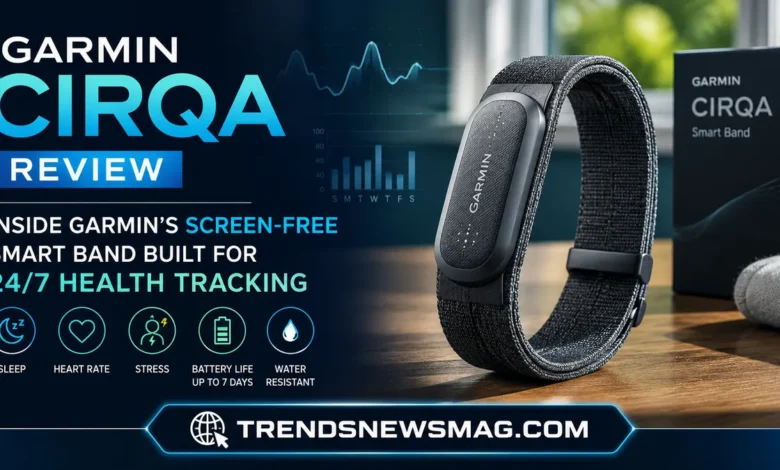
There’s a particular kind of tech fatigue that comes from staring at yet another glowing screen strapped to your wrist. You check your steps, glance at a notification, tap through three menus to find your heart rate, and somehow the device meant to make you healthier ends up making you more distracted. Garmin, a company that has spent over two decades building some of the most trusted fitness and outdoor watches on the planet, seems to have finally acknowledged that not everyone wants a screen buzzing on their arm all day. Enter the Garmin Cirqa, a screen-free smart band that strips away the display entirely and focuses purely on what actually matters: your body, your sleep, your recovery, and your daily activity.


This isn’t Garmin dipping a toe into the screenless wearable space out of curiosity. It’s a direct, calculated response to the growing popularity of devices like Whoop and the newer Fitbit Air, both of which have proven that millions of people actually prefer a minimalist band over a full smartwatch experience. What makes the Garmin Cirqa particularly interesting is that it arrives with zero subscription fees for its core features, a rarity in a market where recurring costs have become the norm. In this article, we’re going to unpack everything about the Garmin Cirqa in real detail: the hardware, the software, the sensors, the battery life, how it compares to its closest rivals, and who should actually consider buying one.
What Is the Garmin Cirqa and Why It’s Turning Heads in 2026
The Garmin Cirqa is Garmin’s first screen-free health and fitness tracker, officially announced in July 2026 and positioned as a companion piece to the brand’s existing lineup of Venu, Vivoactive, and Forerunner smartwatches. Unlike those devices, the Cirqa doesn’t have a display at all. There’s no touchscreen, no menus to scroll through, no notifications lighting up your wrist during a meeting. Instead, it’s a soft fabric band with a small sensor module tucked inside, designed to be worn continuously, day and night, without ever demanding your visual attention.
What’s driving the buzz isn’t just the lack of a screen, though that alone is a significant departure for Garmin. It’s the combination of genuinely advanced health metrics, Garmin’s trusted sensor accuracy, and a price and subscription model that undercuts its biggest rival. Susan Lyman, Garmin’s Vice President of Consumer Sales and Marketing, summed up the intent behind the device rather plainly: “We purposefully created CIRQA Smart Band for those who are passionate about staying healthy and active. With its discreet design and trusted health and fitness tracking tools Garmin is known for, this smart band complements our lineup of popular smartwatches and wellness monitors.” That statement tells you almost everything about the philosophy here. This isn’t meant to replace a Garmin smartwatch; it’s meant to sit alongside one, or serve as an entry point for people who’ve never worn a Garmin device before.
The timing matters too. Wearable fatigue is real, and a lot of people who tried a smartwatch a few years ago ended up abandoning it because the notifications, the constant charging, and the sheer bulk on the wrist became annoying rather than helpful. The Garmin Cirqa is a direct answer to that frustration, betting that people still want the data without the distraction. It’s a smart bet, and one that positions Garmin to compete in a segment it previously had almost no presence in.
Design and Comfort: How the Garmin Cirqa Feels on Your Wrist (or Arm)
Physically, the Garmin Cirqa looks nothing like a traditional Garmin watch. There’s no round or square face, no buttons scattered around a bezel, no metal casing catching light. Instead, the sensor module is held securely inside a soft fabric loop, similar in concept to how Whoop’s band works, with a single button on the side for basic interactions like starting an activity or acknowledging an alarm. The whole design leans into the idea of invisibility. You’re supposed to forget you’re wearing it.
That fabric-first approach has a practical benefit beyond aesthetics. Because the sensor pod is removable from the band, you can wear the Garmin Cirqa in more than one way. Garmin offers both wrist-based and upper-arm placements, with swappable straps sold separately for each. Upper-arm wear has become increasingly popular among serious athletes and people who find wrist-based optical sensors less accurate during high-intensity movement, since the upper arm tends to stay more stable and has better blood perfusion for consistent heart rate readings. This flexibility is something neither Whoop nor Fitbit Air currently offers in quite the same straightforward way, and it’s a small but meaningful point of differentiation.
Comfort was clearly a design priority as well. The band uses what Garmin calls a ComfortFit fabric wristband, designed to be worn continuously without irritating skin, even during sleep or showering. Anyone who’s worn a rigid smartwatch case to bed knows how uncomfortable that can be, especially if you sleep on your side with your wrist tucked under a pillow. The fabric design of the Garmin Cirqa solves that specific annoyance, and it comes in multiple color options, so it doesn’t feel purely utilitarian. It’s meant to disappear into your daily routine rather than announce itself as another piece of tech you’re managing.
Inside the Garmin Cirqa: Sensors, Chipset, and Core Technology
Underneath that unassuming fabric exterior, the Garmin Cirqa is running some fairly serious hardware. It uses Garmin’s Elevate V4 optical heart rate sensor, which, while one generation behind Garmin’s absolute latest sensor technology, is still a proven and reliable component used across several of the brand’s mainstream smartwatches. This sensor handles continuous heart rate monitoring, resting heart rate tracking, and feeds data into more complex calculations like heart rate variability and stress scores.
Alongside the heart rate sensor, the Garmin Cirqa includes a pulse oximeter for blood oxygen saturation readings, a skin temperature sensor, and an accelerometer for motion and activity detection. This combination isn’t just a checklist of sensors thrown together for marketing purposes; each one plays a specific role in the broader health picture the device is trying to build. The skin temperature sensor, for instance, is central to both sleep quality analysis and the women’s health tracking features, since subtle temperature shifts can indicate everything from illness onset to hormonal cycle changes.
What’s notable is the absence of a few things you might expect from a modern wearable. There’s no GPS chip built directly into the sensor module for standalone location tracking, though it does support connected GPS through your paired smartphone for activities like outdoor running or cycling. There’s also no onboard music storage, no Garmin Pay contactless payment support, and no Wi-Fi radio. These omissions aren’t oversights; they’re deliberate trade-offs that keep the device small, light, and focused purely on health and fitness data rather than trying to be a miniature smartphone substitute. If you’re coming from a full-featured smartwatch, this stripped-down approach might initially feel limiting, but it’s precisely what allows the Garmin Cirqa to achieve its battery life and its screen-free simplicity.
Health Tracking Features That Set the Garmin Cirqa Apart
The headline feature of the Garmin Cirqa is genuinely comprehensive round-the-clock health monitoring. Because the band is designed to be worn continuously, including through sleep, it captures a much fuller picture of your physiology than a device you only strap on during workouts. Metrics include continuous heart rate, Body Battery energy monitoring, Pulse Ox readings, stress tracking, and skin temperature, all of which sync automatically to the Garmin Connect app on your phone.
Body Battery in particular is one of Garmin’s most useful proprietary metrics, and it’s worth explaining for anyone unfamiliar with it. Rather than just showing you raw heart rate numbers, Body Battery translates your physiological data, including sleep quality, stress levels, and activity, into a single score representing your available energy reserves, similar in concept to a phone’s battery percentage but for your body. Wake up after a poor night’s sleep and a stressful day, and your Body Battery might start low and drain quickly. Get a great night’s rest and take it easy, and you’ll see it climb steadily. Having this metric available continuously, thanks to the Garmin Cirqa’s 24/7 wear design, gives a much more nuanced view than checking it once or twice a day on a traditional watch.
Stress tracking works in a similar continuous fashion, using heart rate variability patterns to estimate when your nervous system is under strain, even if you don’t consciously feel stressed. This kind of passive insight is genuinely valuable because a lot of physical stress goes unnoticed until it manifests as fatigue, irritability, or poor sleep days later. It’s worth being clear-eyed here, though: as useful as these insights are, no wearable, including the Garmin Cirqa, should be treated as a diagnostic medical tool. Garmin itself is explicit that this is a consumer wellness device, not a medical device intended to diagnose or monitor conditions. That distinction matters, and it’s one reason why pairing wearable data with professional guidance still makes sense. In fact, this is a good moment to acknowledge something broader about technology’s role in our lives: even the most sophisticated sensors can’t replace the judgment, empathy, and clinical expertise that come from an actual human being, a point explored thoughtfully in why technology cannot replace humans, which digs into exactly where the limits of automated tools lie.
Sleep Tracking and Recovery Insights on the Garmin Cirqa
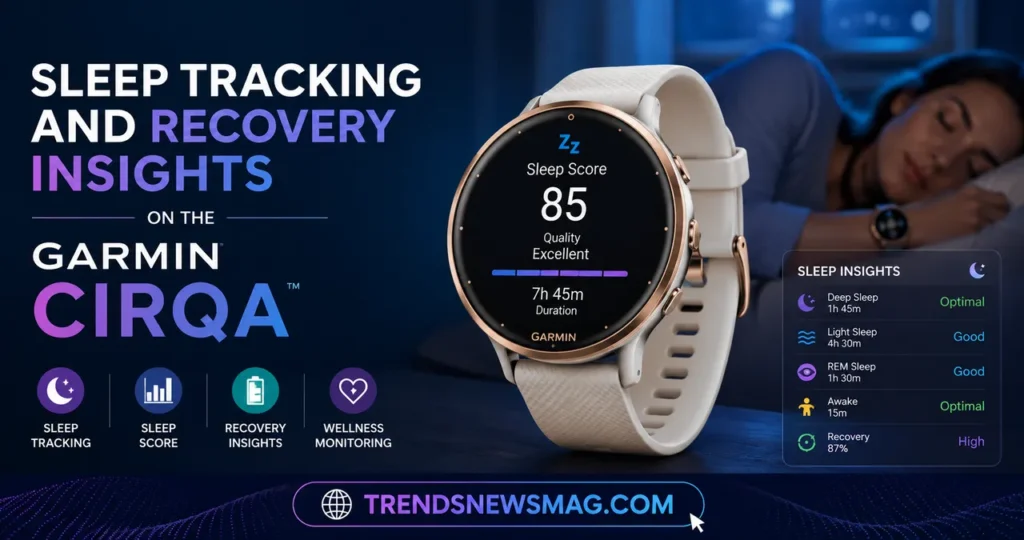
Sleep is arguably where the Garmin Cirqa shines brightest, and that makes sense given its always-on wear philosophy. Because there’s no bulky screen or rigid casing to remove before bed, people are far more likely to actually keep it on overnight, which is precisely when the most valuable sleep data gets collected. The band tracks detailed sleep stages, separating out light sleep, deep sleep, REM sleep, and periods of wakefulness, then compiles all of it into an overall sleep score you can review each morning in Garmin Connect.
Beyond the basic stage breakdown, the Garmin Cirqa also provides guidance on optimal sleep duration tailored to your own patterns, rather than relying on generic eight-hour recommendations that don’t account for individual variation. It monitors heart rate variability throughout the night, tracks respiration rate, and even detects naps automatically, so an afternoon rest on the couch still gets logged and factored into your daily recovery picture. This level of granularity used to be reserved for premium subscription services on competing platforms, but here it’s included without any additional monthly fee.
For anyone who has previously invested in dedicated sleep accessories, like specialized earbuds designed to mask ambient noise or play calming soundscapes through the night, the Garmin Cirqa complements that kind of setup nicely rather than competing with it. If you’ve read reviews of products like the Ozlo Sleepbuds, you’ll know that a growing number of people are building out entire ecosystems focused purely on improving sleep quality, and a screen-free tracker like this fits naturally into that kind of routine since it doesn’t add any light, sound, or haptic disruption during the night. Recovery metrics derived from this sleep data, including training readiness scores, also feed back into the fitness side of the device, telling you whether your body is primed for a hard workout or whether you should ease off and prioritize rest instead.
Women’s Health and the Garmin Cirqa’s Cycle Tracking Tools
One of the more thoughtfully built-out aspects of the Garmin Cirqa is its women’s health functionality. The device allows users to track their menstrual cycle and pregnancy, with period predictions and retrospective ovulation estimates generated partly through the overnight skin temperature sensor. Because temperature naturally fluctuates in predictable patterns across the menstrual cycle, having a device that continuously monitors this while you sleep provides more accurate insights than manual logging alone ever could.
Perhaps even more significant is the integration with Natural Cycles, an FDA-cleared birth control app that can sync directly with data collected by the Garmin Cirqa when worn on the wrist. This requires a separate Natural Cycles subscription, so it’s not a free feature bundled into the device itself, but the technical integration is notable because it means the temperature and cycle data captured passively throughout the day and night can support a clinically validated fertility awareness method rather than existing as a standalone wellness gimmick. For women who have been tracking cycles manually through spreadsheets or basic period-tracking apps, this kind of automated, sensor-based approach represents a meaningful upgrade in both convenience and accuracy.
It’s worth noting, again, that Garmin is careful about the language it uses here. The compatible devices, including the Cirqa, are described as consumer wellness devices, not medical instruments intended to diagnose or treat conditions, and the Natural Cycles app independently determines fertility status using its own algorithms alongside the skin temperature and other data it receives. This is an important nuance for anyone considering the Garmin Cirqa specifically for reproductive health tracking or fertility awareness purposes: the band is a data source, and the actual health guidance and interpretation still comes from validated medical software or professional consultation.
Fitness and Activity Tracking: 80+ Sports Profiles Explained
Despite lacking a screen, the Garmin Cirqa is far from a passive step counter. It supports automatic detection and recording of more than 80 different activities, ranging from running and cycling to yoga, strength training, and swimming. This automatic detection is particularly clever given the lack of a display; instead of manually selecting a workout mode before you start, as you would on a traditional smartwatch, the Cirqa recognizes movement patterns associated with specific activities and logs them accordingly.
Once an activity has been recorded, you review and confirm it later in the Garmin Connect app on your phone. If the band misidentifies a workout, say, logging a strength training session as generic “activity” rather than correctly categorizing it, you can edit that entry, and Garmin’s algorithm uses that correction to improve future recognition accuracy. This kind of adaptive learning means the device theoretically gets better at understanding your specific habits and movement signatures the longer you wear it, which is a nice touch for people who have a consistent workout routine.
For activities like outdoor running or cycling where location matters, the Garmin Cirqa uses connected GPS, pulling location data from your paired smartphone rather than housing its own dedicated GPS chip. This keeps the device smaller and extends battery life significantly, though it does mean your phone needs to be nearby during outdoor workouts if you want accurate route mapping and pace data. Advanced metrics like VO2 Max, training readiness, and recovery time are also calculated and displayed through the app, giving serious athletes meaningful data to plan their training cycles around, even without ever glancing at their wrist mid-workout.
Battery Life and Everyday Usability
Battery life is one of the standout selling points of the Garmin Cirqa, rated at up to 10 days per charge. That figure puts it comfortably ahead of many traditional smartwatches, which often require daily or near-daily charging, especially when GPS and always-on displays are in heavy use. For context within its own competitive category, the Garmin Cirqa’s 10-day rating sits behind Whoop 5.0’s roughly two-week battery life but ahead of Google’s Fitbit Air, which lasts closer to a week per charge.
This extended battery runtime is a direct benefit of the screen-free design. Displays, particularly always-on or frequently activated ones, are among the most power-hungry components in any wearable device. By removing that element entirely, Garmin freed up significant power budget to extend continuous sensor operation, meaning the Garmin Cirqa can keep monitoring heart rate, temperature, and motion around the clock without demanding you plug it in every night. For anyone who has grown tired of the daily charging ritual that comes with most smartwatches, this alone might be reason enough to consider switching.
Day-to-day usability follows a similarly simplified philosophy. There’s Smart Wake and Quiet Start alarm functionality, letting the band gently wake you during a lighter sleep phase within your chosen window rather than jolting you awake at a fixed time regardless of where you are in your sleep cycle. You can snooze with a quick button press or stop the alarm with a longer hold. Basic safety and assistance features are also available through Garmin Connect, provided your phone is nearby, though it’s worth being clear that Connect itself doesn’t directly call emergency services; it relies on your phone’s connectivity and preconfigured contacts. This is a lighter safety feature set compared to full GPS smartwatches, which is an important consideration if you frequently exercise alone in remote areas.
Garmin Cirqa vs Whoop 5.0 vs Fitbit Air: How It Stacks Up
The screen-free wearable category has become genuinely competitive, and the Garmin Cirqa enters a space already occupied by two well-established rivals. Understanding how these three devices compare helps clarify exactly where the Cirqa’s strengths and weaknesses lie.
| Feature | Garmin Cirqa | Whoop 5.0 | Fitbit Air |
|---|---|---|---|
| Price | $199.99 (no subscription required) | Requires monthly membership | Around $99.99 |
| Battery Life | Up to 10 days | Up to 14 days | Around 7 days |
| Subscription Model | Optional, core features free | Mandatory subscription | Optional premium tier |
| Sensor Suite | Heart rate, Pulse Ox, skin temperature, accelerometer | Heart rate, skin temperature, accelerometer | Heart rate, skin temperature |
| Activity Recognition | 80+ automatic activities | Automatic activity detection | Automatic activity detection |
| Women’s Health Tracking | Cycle tracking, Natural Cycles sync | Menstrual cycle coaching | Basic cycle tracking |
| Wear Placement | Wrist or upper arm | Wrist, bicep, or torso | Wrist only |
Looking at this comparison, the Garmin Cirqa’s biggest advantage is clear: no mandatory subscription for its core health and fitness features. Whoop has built its entire business model around recurring membership fees, meaning the hardware itself is almost secondary to the ongoing subscription revenue. For consumers who are tired of subscription fatigue across every corner of their digital lives, the Garmin Cirqa’s approach feels refreshingly straightforward. At the same time, Whoop’s slightly longer battery life and its more mature ecosystem of coaching features built specifically around recovery and strain give it a continued edge for hardcore athletes who don’t mind paying for deeper analytics.
Fitbit Air, on the other hand, undercuts the Garmin Cirqa significantly on price, coming in at roughly half the cost. But that lower price comes with a correspondingly simpler sensor suite and shorter battery life. The Garmin Cirqa positions itself squarely in the middle: more expensive than Fitbit Air but with more robust health metrics and Garmin’s long-established reputation for sensor accuracy, while avoiding the subscription lock-in that defines the Whoop experience. If you’re weighing these three options, the decision largely comes down to whether you value subscription-free ownership, maximum battery life, or the lowest possible entry price. It’s a bit like comparing flagship smartphones where each brand makes distinct trade-offs; you might find similar trade-off discussions genuinely useful when reading comparisons like this breakdown of the Honor Magic 5 Pro, where premium hardware decisions come down to which features actually matter for your specific use case rather than which spec sheet looks best on paper.
Garmin Connect App: The Software Behind the Garmin Cirqa
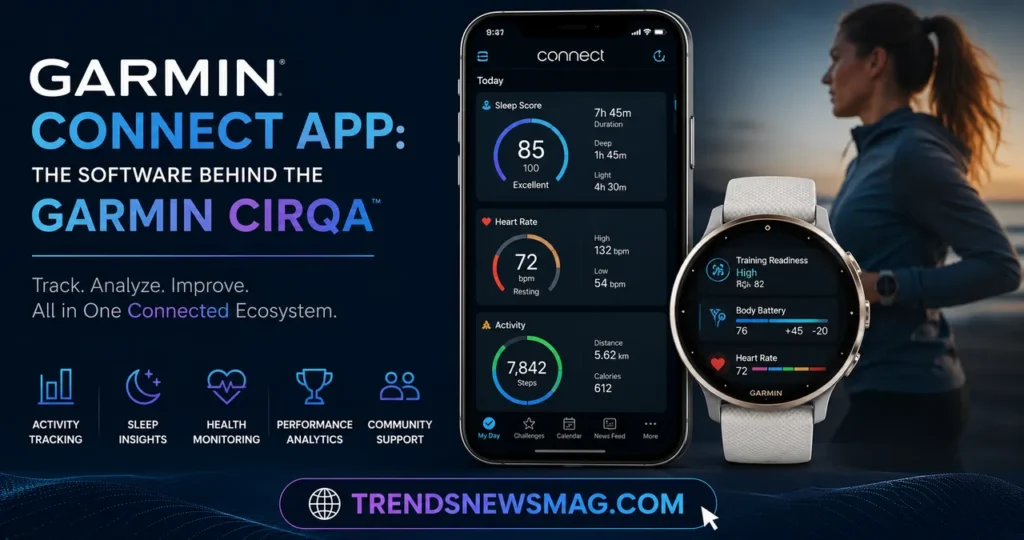
Hardware only tells half the story with any wearable, and the Garmin Cirqa relies entirely on the Garmin Connect app to surface its data, since there’s no onboard display to check anything directly. Garmin Connect has been refined over many years across the company’s broader device lineup, and that maturity shows. The app presents daily summaries covering sleep, Body Battery, stress, heart rate trends, and logged activities in a clean, digestible format that doesn’t require a background in exercise science to understand.
Beyond daily snapshots, Garmin Connect also provides longer-term trend analysis, letting you see how your resting heart rate has shifted over months, how your sleep consistency compares week to week, or how your training load has evolved across a season. This historical context is often more valuable than any single day’s data point, since it helps identify gradual patterns, like slowly rising stress levels during a demanding work period, that might otherwise go unnoticed day to day. The app also handles firmware updates for the Garmin Cirqa itself, ensuring the device continues receiving feature improvements and bug fixes over time without any action required beyond keeping your phone’s Bluetooth connection active.
One thing worth mentioning for anyone who prefers digital organization and note-taking as part of their wellness routine is how naturally this kind of health data pairs with broader digital minimalism trends. Just as some people are shifting away from cluttered note apps toward focused, distraction-free devices like the reMarkable 2 for reading and writing, the Garmin Cirqa fits a similar philosophy for health tracking: capture the data quietly in the background, then review it deliberately rather than compulsively checking a screen throughout the day. It’s a subtle but meaningful shift in how people are choosing to interact with their own health information in 2026.
Pricing, Availability, and Who Should Buy It
The Garmin Cirqa carries a suggested retail price of $199.99 in the US, translating to roughly £180 in the UK market. It’s available in four color options, giving it a bit more personal styling flexibility than some of its more utilitarian-looking competitors. Orders opened shortly after the official announcement, with broader retail availability following within days across Garmin’s usual distribution channels and major electronics retailers.
At this price point, the Garmin Cirqa sits in an interesting middle ground. It’s more expensive than Fitbit Air’s roughly $100 price tag, but because there’s no mandatory subscription attached, the total cost of ownership over a year or two actually compares quite favorably against Whoop, where membership fees alone can add up to well over $200 annually depending on the plan chosen. For someone planning to keep a device for several years, that subscription-free model can represent substantial long-term savings, even if the upfront cost is somewhat higher than the cheapest alternative on the market.
So who should actually buy the Garmin Cirqa? It’s a strong fit for existing Garmin users who want to extend their health tracking into overnight and always-on scenarios without adding a second full smartwatch to their routine. It’s equally compelling for newcomers who’ve been curious about devices like Whoop but have been put off by the ongoing subscription cost, since the Cirqa offers comparable core health insights without that recurring financial commitment. Busy professionals juggling demanding schedules, including people in high-stress fields like law where long hours and irregular sleep are common, might find particular value here; the kind of continuous stress and recovery monitoring the Garmin Cirqa provides can offer useful early warning signs of burnout, in much the same way that dedicated productivity tools discussed in guides like this overview of software built for lawyers help manage workload on the professional side of things. Athletes who want detailed training and recovery metrics without the bulk of a full GPS watch, and anyone specifically interested in the women’s health and cycle tracking features, round out the core audience for this device.
Real-World Use Cases: Who Benefits Most from the Garmin Cirqa
Beyond the broad demographic categories, it’s worth thinking through specific scenarios where the Garmin Cirqa genuinely earns its place on someone’s wrist. Consider a new parent whose sleep schedule has become fragmented and unpredictable. Traditional sleep trackers often struggle to make sense of irregular, broken sleep patterns, but because the Garmin Cirqa is comfortable enough to wear continuously and doesn’t rely on a fixed bedtime routine, it can still capture meaningful nap detection and partial sleep cycle data even during the chaos of early parenthood.
Or consider someone recovering from an illness or managing a chronic condition who wants passive insight into how their body is responding day to day, without needing to actively log symptoms or check a screen constantly. The Garmin Cirqa’s continuous Body Battery and stress tracking can highlight patterns, like slower-than-expected recovery after minor exertion, that might prompt a conversation with a doctor sooner than it otherwise would have happened. Athletes training for endurance events, meanwhile, benefit from the training readiness and recovery time metrics that help balance hard training days against necessary rest, reducing the risk of overtraining injuries that come from ignoring the body’s actual recovery state in favor of a rigid training plan.
There’s also a quieter, less obvious use case worth mentioning: people who simply want to reduce their overall screen time without giving up the health insights that motivated them to buy a wearable in the first place. It’s a genuinely modern problem, one that touches on broader questions about how much of our daily attention gets consumed by devices designed to demand it. Interestingly, this tension between technology’s usefulness and its tendency to overwhelm us shows up across all sorts of unexpected corners of consumer tech culture, even in niche hobbyist spaces like internet radio communities covered in pieces such as Geekzilla Radio, where enthusiasts often talk about deliberately choosing simpler, less intrusive technology experiences. The Garmin Cirqa fits neatly into that same cultural moment, offering meaningful data without the constant visual pull of a screen.
Limitations and Things to Consider Before Buying
No device is without trade-offs, and the Garmin Cirqa has a handful worth understanding clearly before purchasing. The most obvious is the complete absence of a screen, which, while intentional and central to the product’s appeal, does mean you can’t glance at your wrist for a quick time check, incoming notification, or immediate heart rate reading. Everything requires pulling out your phone and opening Garmin Connect, which for some users might feel like an unnecessary extra step, especially during workouts when checking your phone isn’t always convenient.
The reliance on connected GPS rather than a built-in chip is another consideration. If you frequently run or cycle without your phone, perhaps to keep things lightweight during a race or long training run, the Garmin Cirqa won’t be able to accurately map your route or calculate precise pace and distance on its own. This is a meaningful limitation for serious outdoor athletes who prioritize standalone GPS accuracy, and in that case, a traditional Garmin running watch would likely serve better despite the added bulk and shorter battery life.
There’s also the matter of sensor generation. The Elevate V4 heart rate sensor used in the Garmin Cirqa, while reliable, is one generation behind Garmin’s most current sensor technology found in some of its premium smartwatches. For most everyday health tracking purposes, this distinction won’t be noticeable, but it’s worth knowing if you’re comparing raw sensor accuracy specs against Garmin’s top-tier devices. Finally, the more advanced women’s health features, specifically the Natural Cycles integration, require a separate paid subscription to that third-party app, meaning the “no subscription required” marketing applies to the core fitness and health features but not to every single capability the device supports.
The Bigger Picture: Where Garmin Cirqa Fits in the Wearable Landscape
Stepping back from the individual features, the Garmin Cirqa represents something broader happening across the wearable technology industry right now. Consumers are increasingly signaling, through their purchasing habits and their frustrations with existing products, that they want meaningful health data without the baggage of constant notifications, screen addiction, or expensive recurring subscriptions. Garmin, Google, and Whoop all recognizing this simultaneously, with competing screen-free products launching around the same time, isn’t a coincidence; it reflects a genuine shift in what a meaningful segment of the market actually wants from their wearable devices.
For Garmin specifically, the Cirqa also serves a strategic purpose beyond just capturing screen-free market share. It acts as a lower-friction entry point into Garmin’s broader ecosystem, potentially converting Cirqa users into future smartwatch buyers once they experience the quality and reliability of Garmin’s health tracking firsthand. It also gives existing Garmin smartwatch owners a reason to buy a second, complementary device rather than switching brands entirely to get overnight and screen-free tracking capabilities, which is smart from a customer retention perspective.
Looking ahead, it’s reasonable to expect this category to keep evolving quickly. Sensor technology continues improving, battery efficiency keeps getting better, and consumer expectations around what should be included without a subscription fee are only going to increase. The Garmin Cirqa, as a first-generation product in this specific format for Garmin, will likely see iterative improvements in future versions, potentially including newer sensor generations, expanded safety features, or deeper integration with Garmin’s existing smartwatch ecosystem. For now, though, it stands as a genuinely compelling option for anyone who has been waiting for a serious health brand to take the screen-free format seriously.
Conclusion
The Garmin Cirqa arrives at an interesting moment in wearable technology, when consumers are increasingly pushing back against screen fatigue and subscription overload while still wanting genuinely useful health insights. By stripping away the display entirely and focusing on continuous, always-on health monitoring, Garmin has built a device that fits naturally into daily life rather than demanding constant attention. With its 10-day battery life, robust sensor suite including heart rate, Pulse Ox, and skin temperature tracking, comprehensive sleep analysis, and thoughtful women’s health features, the Garmin Cirqa delivers a genuinely complete health picture without requiring a monthly subscription for its core functionality.
That said, it’s not the right fit for everyone. Serious outdoor athletes who need standalone GPS, or anyone who wants at-a-glance information without reaching for their phone, might find the lack of a screen genuinely limiting rather than liberating. But for the growing number of people who want meaningful, passive health data delivered through a comfortable, subscription-free device, the Garmin Cirqa represents one of the most compelling options currently available. It successfully proves that a screen isn’t necessary to deliver serious health and fitness insight, and that alone makes it one of the more significant wearable launches of the year. For the most accurate and up-to-date specifications straight from the source, it’s worth checking Garmin’s own official announcement at garmin.com.
FAQs
Is the Garmin Cirqa a smartwatch or a fitness tracker?
The Garmin Cirqa is best described as a screen-free fitness and health tracker rather than a traditional smartwatch. It doesn’t have a display, so you won’t get notifications, apps, or at-a-glance information directly on the device. Instead, it focuses entirely on collecting health and fitness data continuously, which you then review through the Garmin Connect app on your smartphone. This distinguishes it from Garmin’s Venu or Vivoactive lines, which function as full smartwatches with touchscreens, apps, and interactive features. Think of the Garmin Cirqa as a dedicated data-collection device that prioritizes comfort and battery life over screen-based interactivity.
Does the Garmin Cirqa require a subscription to use?
No, the core features of the Garmin Cirqa, including heart rate tracking, sleep analysis, Body Battery, stress monitoring, and activity recognition, are all available through the free Garmin Connect app without any subscription fee. This is one of the device’s biggest selling points compared to competitors like Whoop, which require an ongoing membership to access even basic functionality. The only exception is the optional integration with Natural Cycles for advanced fertility tracking, which does require a separate paid subscription to that specific third-party app, since Natural Cycles operates independently as an FDA-cleared birth control application.
How accurate is the Garmin Cirqa’s heart rate and health tracking?
The Garmin Cirqa uses Garmin’s Elevate V4 optical heart rate sensor, a proven technology used across several of the company’s mainstream smartwatches, so accuracy for everyday heart rate monitoring, sleep tracking, and stress estimation is generally reliable and consistent with Garmin’s broader reputation for sensor quality. That said, it’s important to remember that the Garmin Cirqa is explicitly marketed as a consumer wellness device, not a medical device intended to diagnose or monitor any specific health condition. For casual fitness tracking, sleep insights, and general wellness monitoring, it performs well, but any concerning health patterns it reveals should still be discussed with a healthcare professional rather than treated as a diagnostic result.
Can the Garmin Cirqa track menstrual cycles and fertility accurately?
Yes, the Garmin Cirqa includes dedicated women’s health tracking that monitors menstrual cycles and pregnancy, using overnight skin temperature readings to help generate period predictions and retrospective ovulation estimates. For users wanting a more clinically validated fertility awareness method, the device can sync its temperature and cycle data with the Natural Cycles app, which is FDA-cleared for birth control purposes, though this requires a separate subscription to that app. It’s worth noting that Garmin frames this data as supporting information rather than a standalone diagnostic tool, meaning the interpretation and clinical validation ultimately comes from Natural Cycles’ own algorithms rather than the Garmin Cirqa hardware itself.
How does the Garmin Cirqa compare to Whoop and Fitbit Air in terms of value?
The Garmin Cirqa occupies a middle position between these two competitors. It’s priced higher than Fitbit Air but offers a more comprehensive sensor suite and Garmin’s established reputation for accuracy, while its lack of a mandatory subscription gives it a significant long-term cost advantage over Whoop, which requires ongoing membership fees regardless of how basic your usage is. Battery life sits between the two rivals as well, at 10 days compared to Whoop’s roughly two weeks and Fitbit Air’s roughly one week. For buyers who want a genuine balance between price, feature depth, and freedom from recurring costs, the Garmin Cirqa often represents the most practical overall value among the three, though the best choice ultimately depends on which specific features and price sensitivities matter most to you.
Trending Today: PlayStation Plus March 2026