Fire Emblem Fortune’s Weave: Everything Known About the Rumored Next Chapter, Its Story, Gameplay, Release Status, and What Fans Should Expect

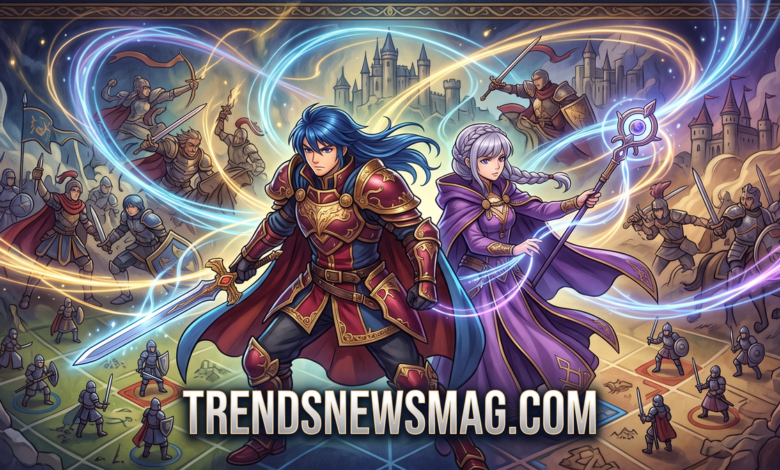
The Fire Emblem series has always thrived on a particular contradiction: its stories can be enormous, but its most memorable moments are often intensely personal. A single conversation between two characters can matter as much as a kingdom falling. A carefully planned turn can save a favorite unit—or permanently remove them from the campaign. That combination of tactical strategy, character drama, political conflict, and fantasy storytelling is what has kept Nintendo and Intelligent Systems’ franchise relevant for decades.


That makes Fire Emblem Fortune’s Weave an especially interesting subject for fans watching the future of the series.
The title has attracted attention as a possible name associated with the next major Fire Emblem project, but there is an important distinction between confirmed information and material circulating through reports, rumors, speculation, and fan discussion. Until Nintendo or Intelligent Systems formally establishes details such as the game’s complete story, release date, platforms, mechanics, and characters, those elements should not be presented as settled facts.
That distinction does not make the subject less fascinating. Quite the opposite. Looking at what the title suggests, how it fits the franchise’s design history, and which features would make sense for a modern Fire Emblem game provides a useful way to understand why the project has generated so much interest.
The following guide separates established series history from expectations surrounding the rumored title, while examining the gameplay systems, storytelling traditions, possible setting, and questions that matter most to longtime players.
What Fire Emblem Fortune’s Weave Actually Refers To
Fire Emblem Fortune’s Weave is a title associated with discussion of a potential upcoming entry in Nintendo’s long-running tactical role-playing franchise. At present, the safest way to discuss it is as a reported or rumored project rather than treating every circulating detail as an official announcement. This matters because the Fire Emblem community has a long history of leaks, speculation, placeholder information, trademarks, concept discussions, and fan theories becoming mixed together online.
A game title alone can also create expectations that are difficult to justify. “Fortune” immediately evokes destiny, prophecy, luck, fate, and the consequences of individual choices. “Weave” suggests interconnected lives, threads of history, political alliances, or perhaps a narrative in which seemingly unrelated decisions eventually converge. Those are compelling thematic possibilities, but they are interpretations of the name, not confirmation of the game’s plot.
The most reliable reference point is the broader franchise. Fire Emblem began in Japan in 1990 with Fire Emblem: Shadow Dragon and the Blade of Light on the Famicom. Over time, the series developed from a relatively specialized strategy RPG into one of Nintendo’s most recognizable role-playing properties. Games such as Genealogy of the Holy War, The Blazing Blade, Path of Radiance, Awakening, Fates, Three Houses, and Engage each experimented with different combinations of tactical combat and character-driven storytelling.
That history is important when evaluating claims about the rumored project. Rather than assuming that every alleged feature must appear, it is more useful to ask whether a proposed mechanic or narrative direction resembles something Intelligent Systems has actually used before.
Why the Title Has Generated So Much Interest
The excitement around Fire Emblem Fortune’s Weave comes partly from timing. Fire Emblem Engage launched for Nintendo Switch in January 2023, following Three Houses in 2019 and its expansion Three Hopes in 2022. That means fans naturally began looking toward whatever might follow the current generation of Fire Emblem releases.
The franchise has also reached an interesting point creatively. Three Houses leaned heavily into social simulation, political storytelling, multiple perspectives, and a school setting. Engage, by contrast, placed greater emphasis on traditional fantasy adventure, tactical combat, and the series’ history through its Emblem system. A future installment could continue either direction, combine both approaches, or deliberately move somewhere else.
This creates a substantial design space for the rumored title. A new entry could return to a more medieval political drama, introduce a completely original continent, revisit mechanics from older games, expand the social elements introduced in recent installments, or experiment with a new battle structure.
The phrase “weave” is particularly evocative in a series where relationships already have mechanical consequences. Support conversations, paired units, recruitment choices, inheritance systems, branching narratives, and permanent character loss have repeatedly connected the personal and strategic sides of the games. In that sense, even without knowing the actual premise, the title feels thematically compatible with Fire Emblem’s traditional interest in interconnected lives.
The Release Status and What Can Be Said With Confidence
The release status is the area where caution is most important. A large number of online articles can make a rumored game appear more officially established than it actually is. Repeated reporting does not automatically turn an unconfirmed detail into a Nintendo announcement.
For Fire Emblem Fortune’s Weave, readers should distinguish among three categories: information officially announced by Nintendo or Intelligent Systems, information attributed to credible reporting, and speculation created by the community. These categories have very different levels of reliability.
| Information area | What can responsibly be said | What should be treated cautiously |
|---|---|---|
| Title | The name has circulated in connection with discussion of a future Fire Emblem project | Whether it is the final commercial title |
| Developer | Intelligent Systems is the franchise’s established primary developer | Specific development teams or partners without confirmation |
| Publisher | Nintendo publishes the mainline series | Unannounced publishing arrangements |
| Story | No complete official story should be assumed from the title alone | Characters, kingdoms, villains, prophecy, and plot leaks |
| Gameplay | Fire Emblem’s established tactical foundation provides useful context | Specific new systems attributed to the rumored project |
| Platform | A platform should not be treated as confirmed without an official announcement | Hardware specifications, exclusivity, launch-window claims |
| Release date | No date should be presented as fact without official confirmation | Retail listings, placeholder dates, rumor-based windows |
This approach may seem conservative, but it is actually more useful for players. Rumor culture moves quickly, and a false release date or invented feature can become repeated across dozens of sites within days. Checking official Nintendo communications and established industry reporting is therefore more valuable than relying on a single social-media post or screenshot.
Nintendo’s official website remains the appropriate place to verify announcements as they become available, while established games journalism can provide context about credible reporting and industry developments.
How Its Name Fits Fire Emblem’s Themes of Fate and Choice
Few themes fit Fire Emblem as naturally as fate versus personal choice. Across different entries, characters have been placed in situations where family history, inherited power, royal bloodlines, ancient weapons, prophecies, and political obligations appear to define their futures.
Yet the player constantly interferes with that supposed destiny.
A character who appears doomed can survive because the player positions another unit correctly. A village can be saved because the player reaches it quickly enough. An enemy can become an ally because the player uses the right character to speak with them. A romance or support relationship can alter how two people understand one another. In classic Fire Emblem, even the possibility of permanent death means that the player’s decisions can produce a version of the story that is genuinely different from another player’s campaign.
That is why a title built around fortune and weaving could theoretically work on several levels. “Fortune” can mean predetermined destiny, but it can also mean chance. “Weave” can mean the deliberate construction of something from individual threads. Together, those ideas mirror one of the franchise’s oldest design tensions: what is predetermined by the narrative, and what is determined by the player’s decisions?
Of course, none of this confirms the actual story. It simply demonstrates why the title has invited so much interpretation.
What a New Fire Emblem Battle System Could Look Like
At its foundation, Fire Emblem is a turn-based strategy game. Units occupy a battlefield grid, movement and positioning matter, weapons have different characteristics, terrain can influence combat, and the player must manage a limited roster of characters across a campaign.
Modern entries have expanded that foundation considerably.
Three Houses introduced battalions, adjutants, flexible class progression, monastery activities, and a major social component. Engage introduced Emblems that allowed characters to inherit or temporarily access abilities associated with legendary heroes from previous games. Earlier entries experimented with mechanics such as pair-up, rescue, skills, mounted movement, weapon durability, branching promotions, and different approaches to recruitment.
A hypothetical new installment therefore has an enormous toolbox.
The smartest evolution would not necessarily be the addition of dozens of systems. Fire Emblem’s tactical identity depends on clarity. Players need to understand why an attack succeeded, why a unit died, and how their positioning created the result. Complexity becomes useful when it creates meaningful decisions rather than simply adding menus.
A new battle system could, for example, place greater emphasis on terrain transformation, weather, formations, morale, battlefield objectives, or interconnected character abilities. Any of these could deepen strategy if implemented carefully.
The most interesting possibility would be a system that connects narrative relationships directly to tactical choices. If the “weave” concept were reflected mechanically, relationships could potentially influence positioning, abilities, rescue options, chain attacks, or special tactical maneuvers. That would reinforce Fire Emblem’s traditional strength: making characters matter both as people and as pieces on the battlefield.
Why Character Relationships Matter So Much
One of Fire Emblem’s biggest transformations occurred outside the battlefield. The series gradually became known not only for strategy mechanics but also for its cast.
The difference between a unit being “a knight with high defense” and being “a knight with a complicated relationship with the protagonist” is enormous. Once players know a character’s fears, ambitions, friendships, rivalries, and personal history, losing that character has emotional weight.
Awakening significantly expanded the role of support relationships and family mechanics. Fates pushed branching storytelling and character relationships further. Three Houses built a large portion of its experience around developing relationships between students, teachers, allies, and political factions. Engage continued the emphasis on supports while placing more weight on its Emblem concept.
A future game has an opportunity to refine this rather than simply making the relationship system larger.
More conversations are not automatically better. The best support systems create information that changes how players understand a character. A seemingly arrogant noble might turn out to be protecting someone. A cheerful fighter could be masking genuine insecurity. A rival may have political reasons for opposing the protagonist rather than simply being “evil.”
That kind of characterization makes tactical decisions more meaningful because the units on screen stop feeling interchangeable.
The Possibility of a More Political Story
If the rumored game follows the series’ recent storytelling ambitions, political conflict could play an important role. Fire Emblem has repeatedly used wars between kingdoms as the foundation for stories about class, loyalty, religion, inheritance, diplomacy, colonialism, and personal responsibility.
Three Houses is perhaps the clearest modern example. Its narrative was structured around competing factions and multiple perspectives, encouraging players to understand why different characters believed they were fighting for legitimate reasons.
That model creates interesting possibilities for a future entry. Instead of dividing the world into a simple heroic kingdom and an evil empire, the story could present several factions with incompatible objectives. One nation might prioritize stability, another independence, another religious authority, and another economic survival. The protagonist’s choices could then have consequences beyond simply defeating the next enemy army.
The danger is narrative complexity for its own sake. Political storytelling works best when the player can understand the motivations behind each faction. If every character has a secret, every nation has three hidden agendas, and every historical event requires a lengthy exposition scene, the emotional core can disappear.
The strongest Fire Emblem stories generally bring enormous conflicts back to individual characters.
How Permadeath Could Shape the Experience
Permadeath remains one of the defining ideas associated with classic Fire Emblem. When a character falls in battle, that loss can permanently affect the player’s roster and sometimes the emotional texture of the campaign.
Modern games have made the concept more accessible. Difficulty options and systems such as rewinding turns have reduced the frustration of losing hours of progress because of one mistake. That approach allows newcomers to experience the series without completely removing the consequences that make tactical battles tense.
A future installment could continue this balance.
The important question is not simply whether permadeath exists. It is how much the game makes the player care about the consequences. If every character is easily replaceable, permanent loss becomes an inconvenience. If every character has meaningful relationships, unique dialogue, and an identifiable role within the army, each casualty feels significant.
This is one reason the rumored title’s themes are intriguing. A “weave” of relationships would theoretically make the loss of one thread affect others. Again, that is thematic interpretation rather than confirmed information, but it points toward an interesting design philosophy for a new strategy RPG.
What New Players Should Know Before Following the Rumors
Someone discovering Fire Emblem through discussion of Fire Emblem Fortune’s Weave does not need to play every previous installment to understand the franchise. The mainline games generally use separate settings and casts, although they share recurring concepts, names, archetypes, mechanics, and occasionally crossover elements.
There is no single continuous story stretching from the first game to the newest one.
That makes the series unusually approachable. A player can start with a modern entry and learn the core concepts—weapon ranges, movement, terrain, classes, supports, skills, recruitment, and resource management—without knowing the entire history of Archanea, Valentia, Jugdral, Elibe, Tellius, Fódlan, Elyos, or the other settings.
At the same time, longtime fans gain additional enjoyment from recurring ideas. The importance of dragons, legendary weapons, royal bloodlines, ancient civilizations, divine beings, and world-threatening forces is part of Fire Emblem’s broader fantasy vocabulary.
For newcomers, the best preparation is therefore not memorizing lore. It is understanding the philosophy of tactical RPGs: positioning matters, information matters, and every turn can change the shape of the battle.
How the Franchise Has Changed From Classic to Modern Fire Emblem
The evolution of Fire Emblem is one of the best ways to understand what a new game might need to accomplish.
Early entries were relatively focused strategy RPGs. Maps, unit placement, weapon matchups, recruitment, and survival formed the heart of the experience. Characters were important, but the amount of dialogue and social interaction was generally much smaller than in contemporary installments.
Later games expanded the character layer dramatically.
The Blazing Blade helped introduce the franchise to Western audiences. Path of Radiance and Radiant Dawn developed larger-scale fantasy narratives and factional conflict. Awakening broadened the series’ international popularity and emphasized accessible systems, relationships, and customization. Fates experimented with multiple story routes. Three Houses transformed the social side into a major part of the campaign. Engage returned toward a more adventure-focused structure while celebrating the franchise’s history through its Emblems.
That trajectory suggests that the next major entry does not have to choose between “classic” and “modern” Fire Emblem. It could combine them.
The ideal balance would preserve the tactical precision that defines the series while ensuring that customization and social systems serve the strategy rather than overwhelming it.
Could the Game Introduce a New Continent and Cast?
A completely new setting would make sense for a major Fire Emblem installment. The franchise has repeatedly used new continents and civilizations, allowing developers to establish new political structures, mythology, characters, and visual identities without being constrained by an existing cast.
A fresh setting also prevents returning lore from becoming a barrier.
The title itself does not establish where the story takes place, but the idea of “weaving” could fit a world in which several civilizations are historically connected. Perhaps different kingdoms could possess separate versions of the same ancient legend. Perhaps a major conflict could be rooted in competing interpretations of a shared historical event. Or perhaps the central metaphor could involve literal textiles, fate, or magical threads.
These are possibilities rather than leaks or confirmed plot points.
What matters from a design perspective is that a new continent should have an identity beyond names on a map. Strong Fire Emblem worlds distinguish their cultures through architecture, clothing, music, military organization, religion, geography, and character design. Players should be able to recognize where a character comes from without needing an encyclopedia.
The Role of Music, Art, and Presentation
Fire Emblem is also an audiovisual series. Its music frequently shifts between grand orchestral themes, character motifs, battle music, emotional piano passages, and regional styles.
That becomes particularly important during long campaigns. Players may spend dozens of hours with the same characters, so recurring musical themes can create emotional associations that become stronger over time.
Visual design matters for the same reason.
The franchise has moved through several artistic directions, from the comparatively restrained presentation of older games to the highly detailed character art and 3D environments of recent releases. A new title would likely face the challenge of creating a visual identity that feels unmistakably Fire Emblem without simply copying the previous game.
Character silhouettes, armor design, weapon aesthetics, animation quality, facial expressions, and environmental storytelling can all contribute to that identity.
If the rumored title ultimately exists as a major new installment, its art direction will likely be one of the first things that tells players what kind of Fire Emblem they are getting.
What Fans Should Be Careful About When Reading Leaks
Rumors are part of modern gaming culture, but not all rumors are equally informative. A supposed leak may contain genuine information, partially correct information, speculation presented as fact, or completely invented details.
Screenshots deserve particular scrutiny. A polished image is not automatically evidence of a finished game. Internal development materials can change, assets can be prototypes, and images can be manipulated.
The same applies to release dates. Retail listings often use placeholder information, and unofficial social posts can repeat dates without an independent source.
A useful rule is simple: the closer a claim is to a concrete production detail, the more important independent verification becomes.
Nintendo’s official announcements should take priority for confirmed information. Established outlets can then provide reporting and context. Community forums are valuable for discussion, theories, and discovering information, but they should not automatically be treated as primary sources.
That distinction is particularly important with Fire Emblem Fortune’s Weave because a memorable rumor can become difficult to separate from reality once it has been repeated often enough.
What an Ideal Difficulty System Could Offer
Difficulty has always been complicated in Fire Emblem because the series serves different kinds of strategy players. Some people enjoy carefully solving difficult maps where every action matters. Others primarily want the characters and story and prefer a forgiving experience.
Modern Fire Emblem has generally moved toward providing options rather than forcing everyone into one experience.
A future title could take that philosophy further by allowing players to customize the consequences of failure without dramatically changing the tactical fundamentals. Casual modes can make the series approachable, while higher difficulties can demand precise resource management, stronger enemy formations, limited opportunities for recovery, and better understanding of class strengths.
The key is making each difficulty feel intentionally designed rather than simply changing enemy statistics.
Advanced players often enjoy difficulty because it changes how they think. A map becomes more interesting when the player must decide whether to protect a weak unit, spend a valuable healing resource, take a risky objective, or sacrifice short-term positioning for a larger strategic advantage.
That is where Fire Emblem remains distinct from many conventional RPGs.
Why Tactical Depth Should Remain the Priority
Fire Emblem has accumulated many systems over the years, but its enduring identity comes from tactical decision-making.
A beautiful story cannot compensate for battles that feel repetitive. Conversely, an exceptional combat system can keep players engaged even when they already know the story. The best entries combine both.
For a new game, tactical depth could come from enemy behavior, map design, terrain, objectives, unit roles, class differentiation, and meaningful resource decisions.
Map design is especially important.
A good battlefield asks the player several questions at once. Can the healer reach the frontline? Is the bridge worth defending? Should a cavalry unit capture an objective while the main army holds the center? Can a fragile mage safely attack from range? Is the apparent shortcut actually a trap?
Those questions are what transform a grid into a strategy game.
How a “Weave” Concept Could Work Mechanically
If the title’s metaphor were reflected in gameplay, a relationship-based tactical system could be particularly appropriate.
Imagine a system in which units build battlefield connections through repeated cooperation. Two characters fighting together might unlock a defensive maneuver. A commander could connect distant parts of the army through a temporary tactical network. Certain abilities could strengthen when multiple allied units occupy linked positions.
Such a mechanic would reward formation and teamwork without requiring every character to become individually overpowered.
The idea also fits Fire Emblem’s existing support philosophy. Relationships already influence combat in several entries, so expanding that concept would feel like an evolution rather than an unrelated gimmick.
There is an important design constraint, however: these systems must remain readable. Players should understand why a bonus exists and how to activate it. If the battlefield becomes covered in hidden relationships, conditional effects, and overlapping bonuses, tactical planning can become unnecessarily opaque.
A good system should make the player’s decisions clearer, not the rules harder to follow.
Fire Emblem’s Place Among Modern Strategy RPGs
The series occupies a distinctive position within the strategy RPG genre. Games such as Final Fantasy Tactics, Tactics Ogre, Triangle Strategy, XCOM, Disgaea, and Valkyria Chronicles approach tactical combat in very different ways.
Fire Emblem’s distinguishing characteristic is the integration of character progression and battlefield consequences with a highly readable turn-based structure.
Classes matter. Weapons matter. Relationships matter. The map matters. But the game also asks players to become emotionally invested in the units they deploy.
That combination creates a special feedback loop.
You become attached to a character, so you want them to survive. Because you want them to survive, you plan more carefully. Because you plan more carefully, the battle becomes more meaningful. When that character eventually succeeds in a difficult encounter, the victory feels personal rather than merely numerical.
A new entry would benefit from protecting that loop even if it introduces ambitious new mechanics.
Why the Series’ Legacy Matters to a New Entry
Any new Fire Emblem game inherits decades of expectations. Fans may want classic weapon triangles, traditional support conversations, permanent character death, elaborate class systems, branching stories, familiar fantasy archetypes, or references to previous heroes.
Other players may want the opposite: a clean break.
Engage demonstrated how a modern game could use the franchise’s history as a major gameplay feature through its Emblems. A future title could instead minimize historical callbacks and concentrate entirely on its own world.
Neither approach is inherently necessary for the series to work.
The important question is whether nostalgia serves the new game’s identity. Returning concepts are most effective when they have a mechanical or narrative purpose. A reference that exists only because longtime players recognize it may produce a moment of excitement, but a system that meaningfully connects past and present can influence the entire experience.
What Players Can Reasonably Expect From a Future Announcement
Until official details emerge, expectations should remain flexible. The established identity of the franchise gives us a useful framework, but it cannot predict every design choice.
Players can reasonably expect the broad foundations associated with Fire Emblem: tactical battles, character development, fantasy storytelling, strategic positioning, class progression, and a substantial campaign. Beyond that, specifics should wait for confirmed information.
A formal announcement would likely answer the biggest questions quickly: platform, developer, release window, visual direction, central characters, setting, and basic gameplay concept.
The first trailer would also reveal something that rumors cannot: tone.
Is the world bright and adventurous? Dark and tragic? Political and grounded? Mythological and surreal? Is the protagonist a traditional lord, an outsider, a mercenary, a royal heir, or something entirely different?
Those details matter because Fire Emblem’s identity is built from the interaction between mechanics and atmosphere.
FAQ: Is Fire Emblem Fortune’s Weave officially confirmed?
Fire Emblem Fortune’s Weave should not be treated as fully confirmed simply because the title appears in online discussions or reports. Until Nintendo or Intelligent Systems publicly announces the project and provides definitive information, details surrounding its plot, mechanics, characters, platform, and release date should be regarded with appropriate caution.
For readers tracking the game, the most reliable approach is to check official Nintendo communications and compare credible reporting before accepting specific claims. A rumor can be interesting without being established fact, and keeping those categories separate prevents outdated speculation from being mistaken for official information.
Is Fire Emblem Fortune’s Weave a new mainline game?
The title has been discussed in connection with a potential future Fire Emblem project, but the precise status and classification should not be assumed without an official announcement. Fire Emblem has included mainline releases, remakes, spin-offs, mobile titles, and crossover projects, so identifying a project as the next mainline installment requires confirmation.
The distinction matters because expectations for a numbered or major original entry are different from those for a remake or spin-off. Until Nintendo clearly describes the project, claims about its exact position within the franchise remain premature.
What could the story of Fortune’s Weave be about?
The title naturally suggests themes involving fate, destiny, chance, interconnected lives, and the consequences of individual decisions. “Weave” can evoke the idea of multiple storylines or relationships becoming connected, while “fortune” can refer either to destiny or luck.
Those interpretations are useful for understanding why fans are interested, but they should not be confused with confirmed plot information. There is currently no reason to treat a particular protagonist, kingdom, villain, prophecy, or storyline as established solely from the title.
Will the game have classic Fire Emblem gameplay?
If the project becomes a conventional new Fire Emblem strategy RPG, its design would likely draw from the franchise’s established turn-based tactical foundation. That includes grid-based movement, unit positioning, character progression, combat calculations, classes, weapons, and map objectives.
However, specific systems should not be attributed to the game without confirmation. Fire Emblem has changed its mechanics substantially from one generation to another, so even familiar features such as the weapon triangle, battalions, pair-up, or special character-link systems cannot safely be assumed to appear unchanged.
Do I need to play older Fire Emblem games first?
No. Most major Fire Emblem games are designed around their own casts and settings, so newcomers generally do not need to complete the entire franchise before playing a new installment.
Playing earlier games can add appreciation for recurring ideas and historical references, especially if a future title includes callbacks to famous characters or mechanics. But understanding basic turn-based tactics, unit roles, positioning, and character development is much more important than memorizing the series’ extensive lore.
Where should I check for official information?
Nintendo’s official channels should be the first place to verify announcements, release information, platforms, trailers, and other confirmed details. For broader franchise history, the Fire Emblem series overview on Wikipedia provides a useful reference point, while established gaming publications can offer additional reporting and analysis.
The important principle is to distinguish official announcements from journalism, journalism from anonymous leaks, and leaks from fan speculation. That approach is especially valuable when tracking a highly anticipated title whose details may change during development.
Conclusion: Why Fire Emblem Fortune’s Weave Is Worth Watching
Fire Emblem Fortune’s Weave has become an intriguing subject because the title itself seems to capture several ideas that have always been central to the franchise: fate, choice, relationships, sacrifice, and the way individual decisions can alter a much larger story.
But the most responsible way to approach the project is also the most exciting. Rather than treating every rumor as established information, it is better to examine the possibilities through the lens of Fire Emblem’s actual history. The franchise has repeatedly reinvented itself while preserving a recognizable tactical core, moving from traditional strategy RPGs toward increasingly sophisticated character systems, social mechanics, cinematic storytelling, and experimental combat features.
That gives a future installment plenty of room to evolve.
A new game could build around political intrigue, a completely original continent, deeper relationships, more flexible classes, expanded tactical formations, or an entirely new interpretation of the series’ familiar fantasy foundations. If the concept suggested by the title eventually becomes part of the game’s mechanics, interconnected relationships and player choices could provide an especially natural way to unite story and strategy.
For now, the biggest takeaway is simple: the name creates compelling possibilities, but confirmed information should remain separate from speculation. The eventual official reveal will determine whether the game’s identity revolves around destiny, interconnected narratives, traditional tactical warfare, or something fans have not anticipated at all.
That uncertainty is part of what makes the next chapter of Fire Emblem so interesting. The series has spent more than three decades exploring the consequences of choices on battlefields and in the lives of its characters. Whatever form the next major entry ultimately takes, its success will depend on preserving the element that has always made Fire Emblem distinctive: turning strategy into a story that feels personal.
Trending Today: BetterThisFacts Information by BetterThisWorld: A Complete Guide to BetterThisWorld’s Facts, Information, and Digital Knowledge Platform