Ozlo Sleepbuds Review: Are These Premium Sleep Earbuds Actually Worth the Investment in 2026?

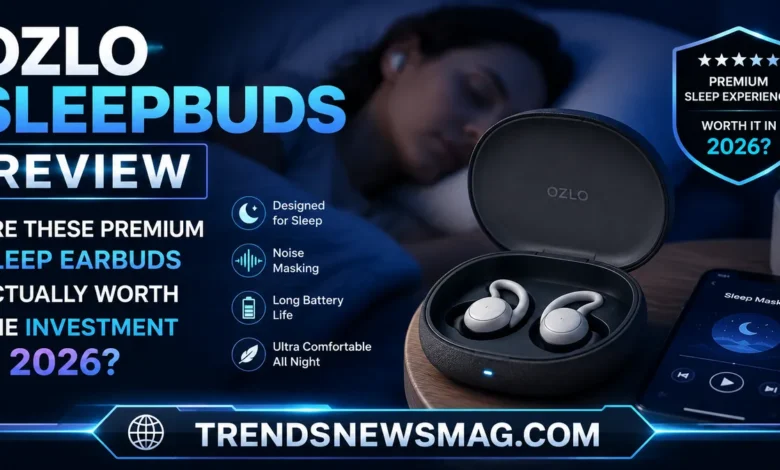
If you’ve spent any time scrolling through sleep-tech forums, wellness subreddits, or product review sites over the past year, you’ve probably run into the name Ozlo Sleepbuds more than once. They’ve become one of those products that seems to divide people into two camps: those who swear these tiny earbuds fixed a sleep problem they’d been fighting for years, and those who take one look at the price tag and wonder if any pair of earbuds is really worth that much money just to fall asleep. Both reactions are understandable, and honestly, both are worth digging into before you make a decision.


Sleep tech has quietly become one of the fastest-growing corners of the consumer electronics world, and it’s not hard to see why. More people than ever are dealing with disrupted sleep, whether that’s from a partner’s snoring, street noise outside an apartment window, a restless mind at 2 a.m., or the simple reality of living in a world that never really goes quiet anymore. Companies have responded with everything from white noise machines to smart mattresses, but earbuds designed specifically for sleeping occupy a strange and interesting niche. They’re not quite headphones, they’re not quite hearing aids, and they’re definitely not meant to be worn the way you’d wear your everyday wireless earbuds. Ozlo Sleepbuds sit right at the center of that niche, and this review is going to walk through exactly what they do well, where they fall short, and who should actually consider spending their money on them.
What Exactly Are Ozlo Sleepbuds, and Why Is Everyone Talking About Them
At their core, Ozlo Sleepbuds are small, wireless earbuds built for one specific purpose: helping you fall asleep and stay asleep through a combination of comfortable in-ear design and sound-based noise masking. Unlike regular earbuds that prioritize bass response, call quality, or workout durability, Ozlo Sleepbuds are engineered almost entirely around the experience of lying down, closing your eyes, and drifting off without being jolted awake by a car alarm, a snoring partner, or a neighbor’s late-night party. They pair with a companion smartphone app that offers a library of soothing soundscapes, personalized alarms that only you can hear, sleep timers, and volume controls tailored for nighttime listening rather than daytime use.
What makes Ozlo Sleepbuds particularly interesting is the story behind who built them. The team includes former engineers from Bose who worked directly on the original Bose Sleepbuds and Bose Sleepbuds II, a product line that developed a genuinely devoted following before Bose discontinued it. When that happened, a lot of loyal users were left without a replacement they trusted, and there was a real gap in the market for a well-engineered sleep earbud that didn’t compromise on comfort. Ozlo essentially picked up where that left off, acquired rights connected to the Sleepbuds name, and built something that keeps the parts people loved while adding features the original never had, like the ability to stream your own music and podcasts instead of being limited only to built-in sounds. That pedigree matters more than it might seem at first glance, because building comfortable in-ear hardware that survives eight hours of side-sleeping without digging into your ear canal is a genuinely difficult engineering problem, and it shows in how differently Ozlo Sleepbuds are shaped compared to standard wireless earbuds.
The Design and Comfort Factor: Why Side Sleepers Keep Mentioning This First
Ask almost anyone who has tried Ozlo Sleepbuds what stood out first, and comfort tends to be the very first thing they bring up. This isn’t a small detail for a sleep product; it’s arguably the entire point. Most wireless earbuds, even expensive ones from major brands, are designed with a profile that sticks out from your ear, which is completely fine when you’re walking around or working out but becomes genuinely painful when you try to lie your head on a pillow with them in. Anyone who has ever tried sleeping in a pair of AirPods knows this problem intimately, and it’s part of why sleep-specific earbuds exist as a category in the first place.
Ozlo Sleepbuds address this with an unusually flat, low-profile design paired with soft stabilizing ear wings that hold the buds securely in place without applying pressure against the side of your head. The result is a fit that’s nearly invisible when you’re lying on your side, which is how the majority of people actually sleep. Reviewers consistently note that after the first night or two of getting used to the sensation of having something in your ear at all, most of that awareness fades entirely, and the earbuds essentially disappear from your attention while you’re trying to fall asleep. That’s a genuinely impressive feat of industrial design when you consider how many other earbuds fail this test completely. There’s also a practical sizing consideration worth mentioning: Ozlo ships multiple eartip sizes in the box, and getting the right fit matters enormously for both comfort and how effectively the noise masking works, since a loose seal lets outside sound leak in regardless of how good the internal audio technology is.
How Ozlo Sleepbuds Actually Block Out Noise (And Why It’s Not Active Noise Cancellation)
This is one of the most misunderstood aspects of Ozlo Sleepbuds, and it’s worth clearing up because it genuinely changes how you should think about the product. Ozlo Sleepbuds do not use active noise cancellation in the way that premium headphones like Sony’s or Bose’s over-ear models do. Instead, they rely on what’s called noise masking, which works by playing a carefully engineered soundscape, like rainfall, ocean waves, white noise, or gentle ambient tones, at a frequency and volume calibrated to cover up disruptive environmental sounds rather than actively canceling them out through phase inversion.
The distinction matters practically. Active noise cancellation is fantastic for consistent, low-frequency drones like airplane engine noise, but it tends to struggle with sudden, unpredictable sounds like a dog barking or a partner shifting in bed. Noise masking takes a different approach entirely: instead of trying to erase the outside world, it gives your brain something more consistent and pleasant to focus on, effectively drowning out the jarring, irregular disruptions that are most likely to wake you up. A lot of sleep researchers argue this is actually more effective for the specific goal of staying asleep, even if it’s technically a less “advanced” technology on paper. As one long-time reviewer put it while comparing the experience to trying to sleep with plain earplugs, having a soft, ever-present layer of ambient sound did more to keep her asleep through her husband’s snoring than total silence ever managed to. Ozlo’s build on this by offering around ten built-in soundscape options, letting users experiment to find whichever pattern their ears and brain respond to best, since noise preference during sleep is surprisingly personal.
Where Ozlo Sleepbuds also distinguish themselves from the original Bose Sleepbuds is the ability to stream your own audio, whether that’s a podcast, an audiobook, a specific meditation track, or your own personal music library, straight through Bluetooth. The original Bose product locked users into its built-in sound library only, which was a common complaint among longtime fans who wanted more flexibility. Ozlo clearly heard that feedback and built a much more open system around it.
Sound Quality, the Companion App, and the Overall Nighttime Experience
Audio quality is a strange thing to evaluate on a sleep product, because you’re not exactly looking for concert-hall fidelity at 11 p.m. while trying to relax. That said, Ozlo Sleepbuds manage to deliver genuinely crisp, clean sound whether you’re using the built-in soundscapes or streaming your own content. The audio profile leans gentle and warm rather than bass-heavy, which actually works in the product’s favor here, since punchy bass tends to feel jarring right before sleep rather than relaxing. If you’re coming from a pair of bass-forward everyday earbuds, don’t expect the same low-end punch; that’s intentional, not a flaw.
The companion app is where a lot of the actual functionality lives, and it plays a bigger role in the overall experience than you might expect from a pair of earbuds. Inside the app, users can browse the full soundscape library, set a sleep timer so the audio fades out automatically after a chosen period rather than playing all night, adjust an auto-equalizer designed specifically for nighttime listening, and set a personal alarm that plays only through the earbuds themselves rather than a shared bedroom alarm clock that could wake up a partner too. That last feature alone solves a genuinely common household problem for couples with mismatched schedules, like one partner needing to wake up for an early shift while the other sleeps in. Some more recent updates to the Ozlo ecosystem have also introduced sleep tracking and biometric sensing capabilities, allowing the earbuds to gather data on sleep patterns over time, similar in spirit to what a smartwatch might track, though built specifically around the in-ear form factor. This positions Ozlo Sleepbuds less as a simple audio accessory and more as an evolving piece of a broader sleep-health ecosystem.
Battery Life and How the Charging Case Fits Into Real Nighttime Use
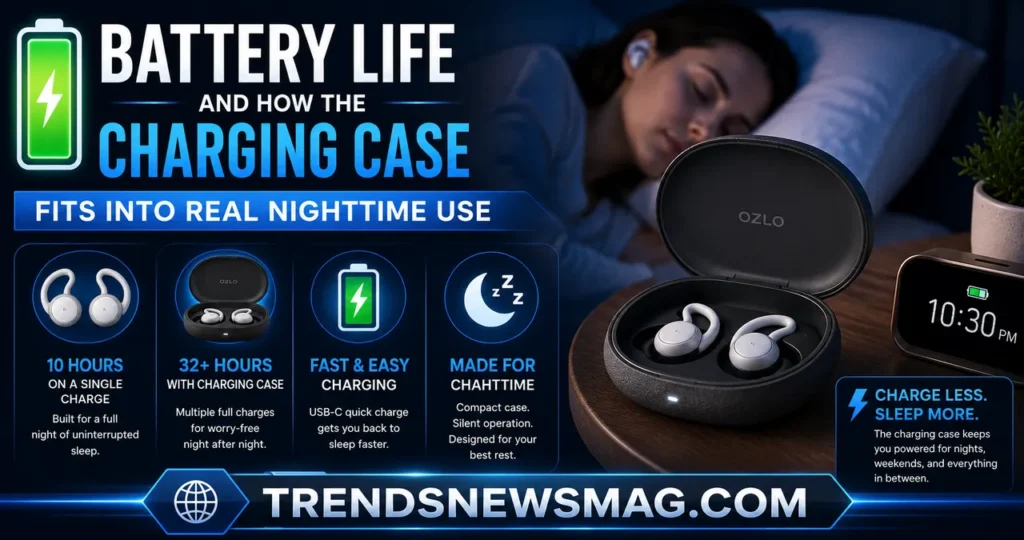
Battery life is a genuinely important consideration for any sleep earbud, because unlike regular wireless earbuds that you might use in short bursts throughout the day, sleep earbuds need to survive a continuous eight-hour stretch without interruption, ideally with some buffer room for restless nights or naps. Ozlo Sleepbuds are rated for roughly ten hours of continuous playback on a single charge, which comfortably covers a full night’s sleep for most people, including a bit of extra time for reading or winding down before actually dozing off.
The compact charging case tops the buds back up quickly during the day, so the daily routine ends up being fairly simple: pop them back in the case each morning, let them charge while you’re up and about, and they’re ready to go again by bedtime. Some reviewers have noted that if you tend to sleep in longer stretches, particularly on weekends, you’ll want to be mindful of charging consistently rather than assuming a single overnight charge will always carry you through, since ten hours is a solid runway but not an unlimited one. It’s also worth mentioning that Bluetooth connectivity requires both the earbuds and your paired device to be within a reasonable range of each other, which is rarely an issue if your phone is on a nightstand but worth keeping in mind if you tend to leave your phone in another room.
Ozlo Sleepbuds Price: Breaking Down the Real Cost of Ownership
Let’s talk about the number that tends to stop people in their tracks. Ozlo Sleepbuds are priced in the range of roughly $299 to $399 depending on the retailer, promotional timing, and whether you’re buying the standard version or a bundle that includes additional accessories. For context, that puts them firmly in premium territory compared to budget sleep earbuds that can be found for $20 to $40, and even above many mainstream wireless earbuds from well-known audio brands.
Ozlo also offers an alternative purchasing model called Ozlo Flex, a subscription option priced around $22 to $26 per month rather than paying the full amount upfront. This can make the product more accessible for buyers who want to try it without a large initial outlay, and it sometimes includes ongoing software feature updates or replacement options as part of the plan, though the specifics can shift over time so it’s worth checking current terms directly before committing. Here’s a simple breakdown to help visualize how the pricing options stack up against a few common alternatives in the sleep earbud space:
| Product | Approximate Price | Noise Technology | Standalone Audio Streaming | Battery Life |
|---|---|---|---|---|
| Ozlo Sleepbuds | $299–$399 (or ~$22–$26/month) | Noise masking with soundscapes | Yes, via Bluetooth | ~10 hours |
| Bose Sleepbuds II (discontinued) | Previously ~$250 | Noise masking, built-in sounds only | No | ~10 hours |
| Soundcore Sleep A20 | ~$139–$179 | Active noise reduction | Limited | Up to 80 hours (case-assisted) |
| Generic budget sleep earbuds | $20–$40 | Passive isolation | Varies | 6–10 hours |
Looking at that table, the price gap between Ozlo Sleepbuds and cheaper alternatives is significant, and it’s fair to ask whether the difference in comfort and audio quality genuinely justifies triple or quadruple the cost of a budget option. From what’s consistently reported across independent reviews, the answer leans toward yes for a specific type of buyer, but not necessarily for everyone, which is exactly why the next section matters so much.
Who Ozlo Sleepbuds Are Actually Built For (And Who Might Want to Skip Them)
Not every product needs to be for everyone, and Ozlo Sleepbuds are a great example of a niche product done well rather than a mass-market gadget trying to please every possible buyer. The ideal Ozlo Sleepbuds customer is someone dealing with a specific, recurring sleep disruption: a partner who snores loudly, thin apartment walls that let in street noise or neighbors, light sensitivity to sudden sounds that jolt them awake mid-cycle, or simply a preference for falling asleep to ambient sound rather than silence. Side sleepers in particular tend to get the most out of the design, since the flat profile solves a genuine physical comfort problem that standard earbuds simply can’t.
On the other hand, if your sleep issues are more related to anxiety, screen time before bed, an inconsistent schedule, or an uncomfortable mattress, Ozlo Sleepbuds aren’t going to be a magic fix, because they’re solving for noise disruption specifically rather than sleep quality as a whole. Someone who already sleeps soundly through the night and doesn’t experience meaningful noise-related disruptions likely won’t notice enough of a difference to justify the price. It’s also worth being honest that at nearly $350, this is a purchase that makes the most sense for people who’ve already tried cheaper solutions, like basic foam earplugs or budget white noise machines, and found them lacking. If you haven’t tried anything yet, it might be worth testing whether ambient sound helps you sleep at all using a free phone app or a cheap fan before committing to a premium hardware purchase.
Real-World Scenarios Where Ozlo Sleepbuds Genuinely Shine
It helps to think through specific situations rather than abstract features, because that’s usually where a product like this proves its worth or falls short. Couples where one partner snores are probably the single most common use case mentioned across reviews, and it’s easy to understand why. Snoring is notoriously difficult to solve from the snorer’s side alone, and asking a partner to sleep in another room every night isn’t a sustainable solution for most relationships. Ozlo Sleepbuds offer a middle ground: the couple stays in the same bed, and the person affected by the noise gets a layer of consistent, soothing sound that masks the disruption without anyone having to change rooms or routines.
Frequent travelers represent another strong use case, particularly for people who end up in unfamiliar hotel rooms, noisy city environments, or shared accommodations where they have zero control over ambient noise levels. Being able to pack a small, comfortable pair of earbuds that creates a consistent sleep environment regardless of location is a genuinely valuable convenience for anyone who travels often for work. Shift workers dealing with the challenge of sleeping during daylight hours when the rest of the world is awake and active also report meaningful benefits, since daytime environments tend to be louder and more unpredictable than nighttime ones. And people living in genuinely loud urban environments, whether that’s traffic, construction, or general city noise bleeding through windows, tend to find the noise-masking approach more forgiving and adaptable than trying to soundproof an entire bedroom, which is often impractical or expensive in rented apartments.
Honest Drawbacks and Things Worth Knowing Before You Buy
No review is complete without a clear-eyed look at the downsides, and Ozlo Sleepbuds do have some worth flagging. The price is the most obvious one, and it bears repeating: this is not an impulse purchase for most people, and it’s a legitimate amount of money to spend on a product that’s essentially solving one specific problem. If your budget is tight, it’s worth weighing whether a $30 pair of foam earplugs or a basic white noise machine might solve 80 percent of the problem for a fraction of the cost before jumping to the premium option.
Bass response is another commonly mentioned limitation. Because the audio profile is intentionally tuned to be gentle and non-jarring for nighttime use, listeners who want punchy, full-range sound for streaming music will likely find it underwhelming compared to standard wireless earbuds built for daytime listening. This is a deliberate design tradeoff rather than a flaw exactly, but it’s worth knowing going in so expectations are set correctly. There’s also the adjustment period to consider. Even with a well-designed low-profile shape, some first-time users report needing a few nights to get fully used to having something in their ears while sleeping, particularly if they’ve never worn any kind of sleep earbud before. This settling-in period is normal and tends to resolve within a week for most people, but it’s fair to mention that the very first night isn’t always the transformative experience marketing might suggest.
Finally, losing or misplacing the tiny earbuds is a real, if somewhat minor, concern that several reviewers mention almost as an aside. Because they’re small and meant to be worn while half-asleep, it’s easy to lose track of one in a tangle of bedsheets, and replacement costs for a single earbud can add up if it happens more than once.
Getting the Most Out of Your Ozlo Sleepbuds Once You Have Them
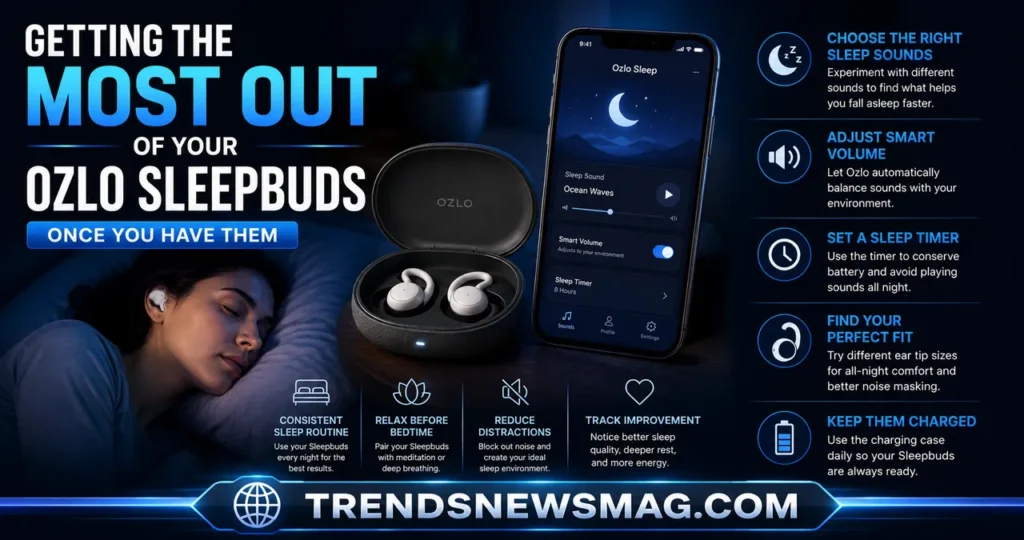
If you do decide to invest in a pair, a few practical tips can meaningfully improve the experience. Spend real time testing the different eartip sizes included in the box rather than assuming the default fit is correct; a poor seal is the single biggest reason noise masking underperforms, since even excellent audio technology can’t compensate for outside sound leaking directly into your ear canal. It’s also worth experimenting across several different soundscape options in the app rather than settling on the first one you try, since sound preference for sleep is genuinely personal, and what works for a friend or a reviewer might not be the one that works best for your own brain.
Setting a sleep timer rather than letting audio play all night can also improve the overall experience for some users, since a full eight hours of continuous sound isn’t necessarily better than a shorter session that helps you fall asleep and then fades out naturally as your body settles into deeper sleep stages. And if sleep tracking features are available on your specific model, giving them a genuine trial over a week or two rather than a single night provides a much more accurate picture of how your sleep patterns are actually responding, since one night of data rarely tells the full story.
Ozlo Sleepbuds Review: Final Verdict
After looking closely at the design, technology, pricing, and real-world use cases, Ozlo Sleepbuds land in a pretty clear place: they’re an excellent, well-engineered product for a specific kind of buyer, and a genuinely poor value for someone whose sleep problems don’t stem from noise disruption. The comfort-focused design solves a real problem that standard earbuds simply weren’t built to handle, the noise-masking approach is thoughtfully implemented and backed by a team with legitimate experience in this exact space, and the added flexibility of streaming personal audio content is a meaningful improvement over the product line that came before it.
At the same time, the price is genuinely high, and it’s fair for potential buyers to want to be confident that noise, rather than some other factor, is actually what’s disrupting their sleep before spending this kind of money. For snorer’s partners, frequent travelers, shift workers, and people in loud environments who’ve already tried cheaper solutions and found them lacking, Ozlo Sleepbuds represent a legitimately strong investment in better rest. For everyone else, it’s worth trying more affordable alternatives first and reserving this purchase for once you’ve confirmed that noise masking, specifically, is the missing piece in your sleep routine. Better sleep is one of those things that pays dividends across nearly every part of daily life, and for the right person, that alone can make the cost feel less like a splurge and more like a genuinely worthwhile investment in how they function every single day.
FAQs
Are Ozlo Sleepbuds comfortable enough to actually sleep in all night?
Yes, comfort is consistently the strongest point across independent reviews of Ozlo Sleepbuds. The flat, low-profile design combined with soft stabilizing ear wings makes them noticeably more comfortable for side sleeping than standard wireless earbuds, which tend to protrude and dig into the pillow. Most users report that after a short adjustment period of a few nights, the earbuds essentially disappear from conscious awareness, which is exactly the goal for a product meant to be worn for a full eight-hour sleep cycle.
Do Ozlo Sleepbuds use active noise cancellation like regular headphones?
No, and this is an important distinction to understand before buying. Ozlo Sleepbuds use noise masking rather than active noise cancellation. Instead of electronically canceling out sound waves, they play calming soundscapes like rain or white noise at a level designed to cover up disruptive environmental noise. Many sleep specialists actually consider this approach more effective for staying asleep through sudden or irregular noises, like a partner shifting in bed, compared to traditional active noise cancellation technology.
How much do Ozlo Sleepbuds cost, and is the subscription option worth it?
Ozlo Sleepbuds typically cost between $299 and $399 for an outright purchase, or can be accessed through the Ozlo Flex subscription at roughly $22 to $26 per month. The subscription can make sense for buyers who want to spread out the cost or aren’t sure yet whether the product will work for their specific sleep issues, while an outright purchase tends to be more economical over the long run for anyone confident they’ll use the earbuds regularly for an extended period.
Can I listen to my own music or podcasts on Ozlo Sleepbuds, or only the built-in sounds?
You can absolutely stream your own audio content through Bluetooth, which is actually one of the biggest improvements Ozlo Sleepbuds offer over the earlier Bose Sleepbuds they evolved from. Alongside the roughly ten built-in soundscapes available through the companion app, users have the flexibility to fall asleep to their own music, audiobooks, or podcasts, giving considerably more personalization than earlier sleep earbud models that locked users into a fixed sound library.
How long does the battery last, and will Ozlo Sleepbuds survive a full night of sleep?
Ozlo Sleepbuds are rated for approximately ten hours of continuous playback on a single charge, which comfortably covers most people’s full night of sleep with a bit of buffer for restless nights, reading time before bed, or occasional naps. The compact charging case makes it easy to top the buds back up during the day, so as long as you’re consistent about placing them back in the case each morning, battery life shouldn’t become a practical issue during normal use.
For additional independent testing and technical benchmarks on sleep earbuds and related audio technology, resources like SoundGuys offer detailed, hands-on comparisons worth reviewing before making a final purchase decision.
Trending Today: Best Refrigerator 2026
Read more: reMarkable 2 Review 2026: Is This Paper-Like Tablet Still Worth Buying Today?