Winobit3.4 Software Error: What It Really Means, Why It Appears, and How to Handle It Safely

If you have searched for a winobit3.4 software error, the first thing to understand is that the name itself deserves scrutiny. There are several recent web pages describing Winobit 3.4 as if it were an established Windows utility, but publicly available authoritative documentation for a genuine product by that name is difficult to verify. Some pages describe it as a system optimization tool, while others claim the software does not have a legitimate public footprint at all. That inconsistency matters because troubleshooting a normal application and responding to a deceptive security warning are two very different situations.


A genuine application can certainly fail because of corrupted files, permissions, incompatible components, or an incomplete installation. At the same time, a suspicious browser alert can deliberately use a technical-looking product name to make an ordinary computer appear infected. The Federal Trade Commission has repeatedly warned that tech-support scams use frightening pop-ups and urgent warnings to convince people that their computers have serious problems.
That makes verification the most important first step. Before downloading a supposed repair utility, calling a phone number displayed in an alert, or giving someone remote access to your PC, establish whether the software and the warning are legitimate.
What the Winobit3.4 Software Error Actually Refers To
The phrase winobit3.4 software error does not appear to identify one universally documented Windows error code or a clearly established Microsoft component. Instead, the term is being used across various websites to describe anything from an application crash to an alleged system-utility malfunction. Some sources describe startup failures, missing files, compatibility problems, and permission errors, while others raise concerns that the name itself may be associated with misleading content.
That distinction is important for troubleshooting. If you installed a program yourself from a trustworthy source and can identify its publisher, installation location, version number, and executable file, you can approach the problem like a conventional software failure. If the message suddenly appeared while browsing, demanded immediate action, displayed a telephone number, or claimed that your computer was infected without you opening any related application, treat it as a potential scam instead.
A useful rule is simple: the appearance of a technical name does not prove that the underlying software is legitimate. A message can contain a version number, hexadecimal-looking codes, official-looking graphics, or references to Windows and still be deceptive. The FTC specifically warns that fake security pop-ups can imitate legitimate technology companies and pressure users into contacting fraudulent support services.
Why Confusion Around Winobit3.4 Matters
The biggest problem with researching the winobit3.4 software error is the lack of a clearly identifiable official documentation trail. A genuine mainstream Windows application normally leaves multiple verifiable traces: a publisher, support documentation, release information, security reputation, download source, and often a recognizable developer community. The available search results for Winobit 3.4 instead contain conflicting descriptions and largely secondary articles.
That does not prove that every reference to the name is malicious. It does mean users should avoid treating random troubleshooting pages as authoritative documentation. In particular, downloading an executable from an unfamiliar website simply because it promises to repair the problem can turn a confusing warning into a genuine security incident.
Consider two different scenarios. In the first, you deliberately installed an application, it crashes immediately, and Windows identifies the executable and publisher. In the second, a website suddenly announces that “Winobit 3.4” has detected dangerous activity and gives you a number to call. The first deserves technical troubleshooting; the second deserves skepticism and browser-security steps.
Common Technical Causes Behind a Genuine Application Failure
If Winobit 3.4 is actually installed on your computer as a legitimate application, conventional software problems remain possible. Damaged installation files are one common cause of startup crashes. An interrupted installation, failed update, disk problem, or accidental deletion can leave an application without a component it needs.
Compatibility can create another failure point. Windows updates can change system libraries, permissions, security policies, or driver behavior. Older applications may therefore behave differently after an operating-system update even when neither the application nor the computer appears physically damaged.
The following table provides a practical diagnostic framework:
| Possible cause | Typical symptom | Sensible first response |
|---|---|---|
| Corrupted installation | Application crashes immediately | Reinstall from a verified source |
| Missing dependency | “DLL,” runtime, or component error | Identify the exact dependency before installing anything |
| Permission problem | Program fails when accessing protected files | Test with appropriate Windows permissions |
| Compatibility issue | Worked before an OS update | Check publisher documentation and compatibility settings |
| Security software interference | Program is blocked or quarantined | Review the security product’s detection details |
| Low system resources | Freezing or crashing under load | Check RAM, storage, and background processes |
| Malware or unwanted software | Unexpected behavior across multiple apps | Run a trusted security scan |
| Fake browser warning | Alert appears while browsing | Close the page and do not call the displayed number |
The key is diagnosis rather than guesswork. Installing several “fixer” programs can introduce more variables, making it harder to determine what actually caused the failure.
How to Tell a Real Error From a Fake Security Warning
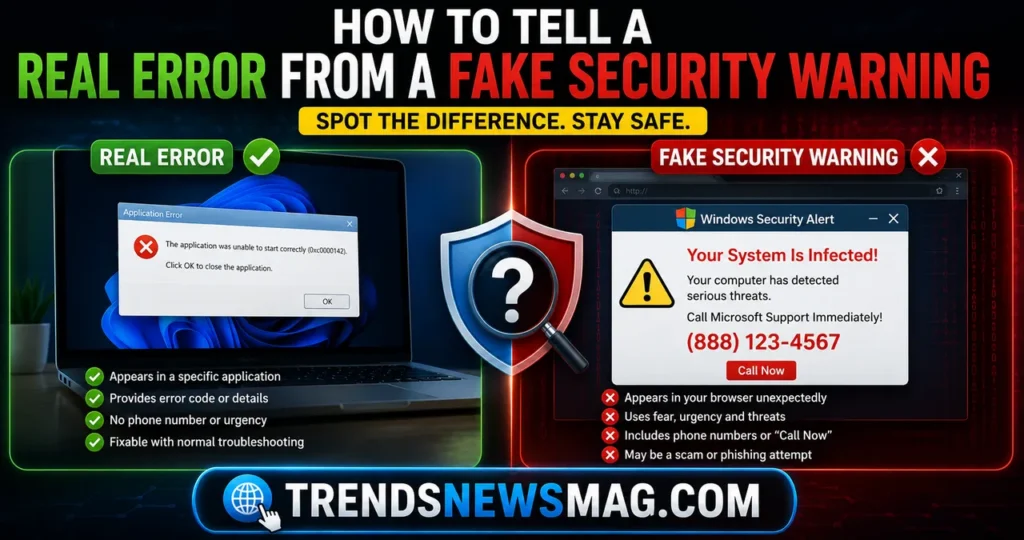
A genuine winobit3.4 software error associated with an installed application should normally have a connection to that application. You should be able to find the program in Windows, identify where it is installed, and determine what action causes the failure. If the supposed error appears only inside a web browser, that is a major reason to stop and investigate before doing anything else.
Another warning sign is urgency. Messages such as “Call immediately,” “Your files are being deleted,” “Your Windows license has expired,” or “Do not shut down your computer” are designed to create panic. The FTC describes this pattern as a common feature of tech-support scams, where fake warnings push victims toward fraudulent support channels.
As the FTC puts it, “Security pop-up warnings from real tech companies will never ask you to call a phone number.”
That is an exceptionally useful principle. If a browser page tells you to telephone a stranger because your computer has supposedly detected an emergency, do not call the number simply because the page looks professional.
What to Do First When the Warning Appears
When a winobit3.4 software error suddenly appears in a browser, avoid clicking buttons inside the warning. Do not download the recommended “repair tool,” and do not provide your name, payment details, Windows password, verification codes, or remote-access permission.
Close the browser tab if possible. If the page attempts to prevent normal interaction, close the browser through Windows or restart the computer rather than following instructions displayed by the suspicious page. Afterward, review your browser extensions and notification permissions if the same warning keeps returning.
If the message came from a legitimate application you knowingly installed, the response is different. Open Windows Settings and confirm that the application actually exists on the machine. Check its publisher and installation details, then look for support information from the publisher rather than relying on an advertisement or random download site.
How to Troubleshoot a Legitimate Installation
If you have verified that the program is genuinely installed, begin with the least invasive solutions. Restart Windows and try the application again. Temporary processes, locked files, incomplete background operations, and memory pressure can occasionally cause software to fail without indicating a permanent problem.
If the problem continues, check whether the application has a legitimate update available from its verified publisher. Avoid “driver updater” or “registry cleaner” websites that promise to repair every problem automatically. Software troubleshooting becomes much safer when each change has a known purpose.
A clean reinstall can be appropriate when application files are damaged. Uninstall the program using Windows’ normal application-management tools, restart the computer, and obtain the installation package only from a source you can independently verify. If you cannot identify an official publisher or trustworthy distribution channel for Winobit 3.4, that uncertainty itself is a reason not to reinstall it.
Why You Should Be Careful With DLL and Runtime Fixes
Search results for software errors often encourage users to download individual DLL files. That approach can be risky. A missing DLL message does not automatically mean you should download that DLL from the first website offering it.
The correct dependency may be part of Microsoft Visual C++ Redistributable, .NET, a hardware driver, or the application itself. Installing a random DLL can introduce an untrusted executable component, create version conflicts, or mask the original problem.
For advanced users, the better approach is to identify the exact module named by the error, determine which legitimate package supplies it, and install that package from its official source. If the error is vague and no verified documentation exists for the application, stop before experimenting with system files.
How Windows Security Fits Into the Investigation
Security software should not automatically be disabled simply because an application refuses to start. If Windows Security or another reputable antivirus product has quarantined a file, inspect the detection name and location first.
A legitimate application can occasionally trigger a false positive, but that should be established through evidence rather than assumption. If an unknown program suddenly asks you to disable antivirus protection, lower security settings, or exclude an unfamiliar folder, that is a serious warning sign.
You should also consider whether the problem affects other programs. One broken application points toward an application-specific issue. Multiple unexplained crashes, browser redirects, unfamiliar extensions, unexpected processes, or security alerts suggest that the investigation should broaden to the overall Windows environment.
What to Do If You Already Called a Support Number
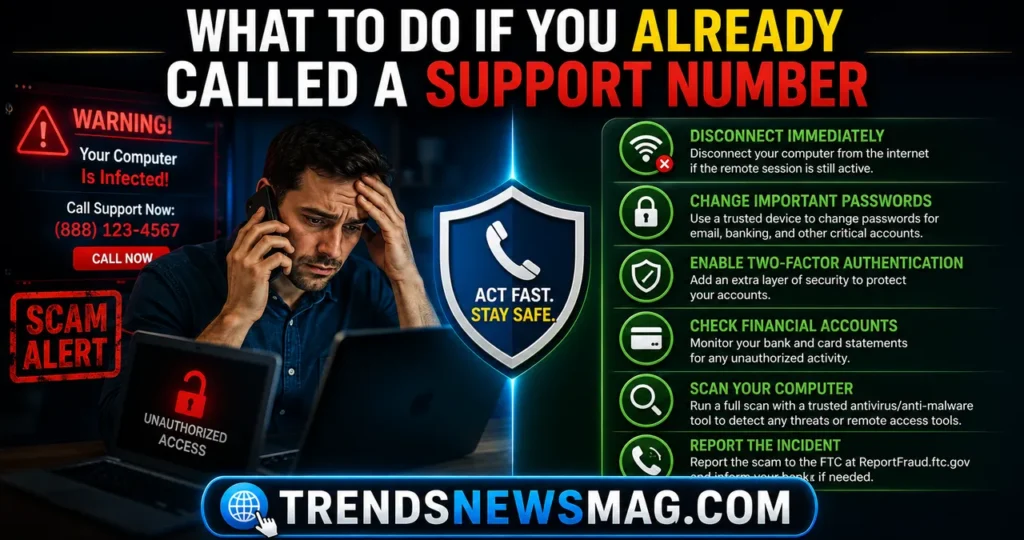
If you responded to a winobit3.4 software error warning by calling a number and allowing remote access, treat the incident as a potential security compromise. Disconnect the affected computer from the internet if a stranger still has access, and use a separate trusted device to change important passwords.
Pay particular attention to email, banking, payment services, cloud storage, and accounts that can be used to reset other passwords. If you gave the caller card or bank information, contact the relevant financial institution promptly and explain what happened.
The FTC warns that tech-support scammers may seek payment, remote access, passwords, or other sensitive information. If remote-control software was installed at the caller’s direction, do not assume that uninstalling the program alone proves the computer is clean. A trusted security professional may need to examine the system, particularly if sensitive accounts were accessed while remote control was active.
How to Verify Software Before Installing It
A reliable verification process is more useful than searching for a magic repair button. Start by identifying the developer or publisher. Then look for official documentation, a legitimate support page, a clear version history, and a reputable distribution channel.
Do not rely solely on search-engine rankings. A website appearing near the top of a search does not establish that its download is safe. Search manipulation, copied articles, advertisements, affiliate pages, and deceptive support sites can all occupy prominent positions.
You can also investigate the file itself. On Windows, inspect the executable’s properties and digital-signature information when available. A trustworthy publisher signature does not make a file automatically safe, but the absence of verifiable publisher information should increase caution.
For general cybersecurity guidance, the Federal Trade Commission’s official tech-support scam guidance is a far stronger reference than an anonymous repair website.
Why Random “Fix” Websites Can Make the Problem Worse
A common mistake is searching for the winobit3.4 software error, clicking the first result, and installing whatever the page recommends. That process feels efficient because the user is already frustrated and wants an immediate solution. Unfortunately, urgency is exactly what deceptive support pages exploit.
Some websites may offer registry cleaners, system optimizers, driver packages, remote-support tools, or “special repair utilities.” None should be installed merely because a webpage says they are necessary. A real troubleshooting process should explain what component is broken and why the proposed repair addresses it.
The safer mindset is to treat every unfamiliar executable as untrusted until its origin and purpose are established. That single habit prevents many secondary problems.
Advanced Checks for Experienced Windows Users
Experienced administrators can investigate application failures more deeply using Windows Event Viewer, Reliability Monitor, Task Manager, and application-specific logs. Reliability Monitor is particularly useful because it presents application crashes and Windows failures on a timeline, allowing you to determine whether the issue began after a particular update or installation.
Event Viewer can provide additional information about application crashes, faulting modules, exception codes, and affected processes. These details are much more useful than a generic pop-up because they can identify whether the crash originates inside the application or a supporting Windows component.
System-file diagnostics can also be appropriate when other Windows applications are malfunctioning. However, advanced repair commands should be used because there is evidence of system corruption, not simply because an unfamiliar website recommends them. A targeted diagnosis is almost always preferable to throwing a dozen repair tools at the computer.
How to Prevent Similar Software Problems
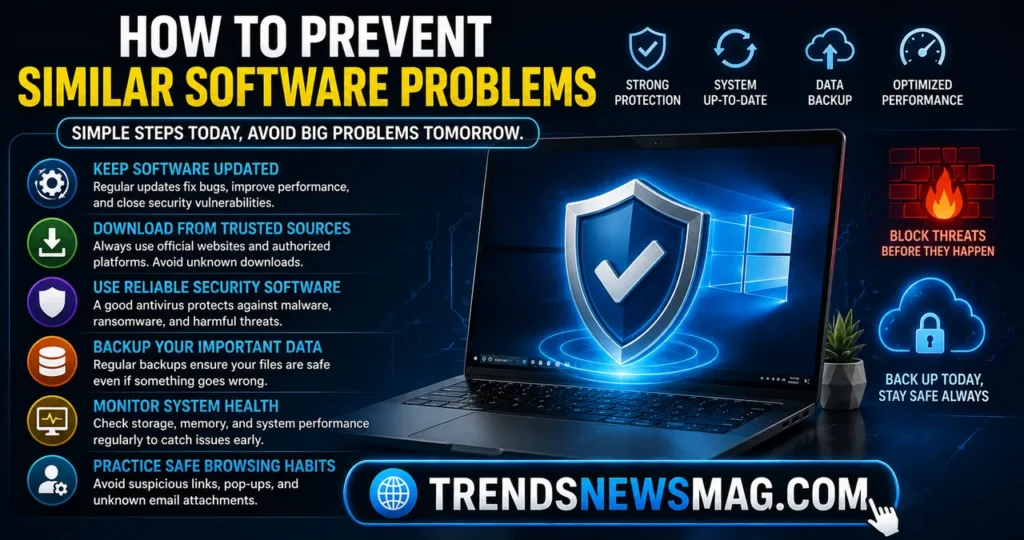
Keeping Windows updated, maintaining adequate free storage, using reputable security software, and installing applications from verified sources can prevent many ordinary software failures. Regular backups are equally important because troubleshooting becomes much less stressful when important files exist somewhere other than the affected computer.
Avoid installing multiple system cleaners, optimization utilities, or driver-management programs that perform overlapping tasks. These applications can modify startup settings, system files, services, or registry entries, creating new conflicts while attempting to solve old ones.
You should also develop a habit of checking where an alert originates. A warning generated by a known application deserves one kind of investigation. A full-screen browser message with an alarming voice, flashing colors, or an emergency telephone number deserves an entirely different response.
Frequently Asked Questions About Winobit3.4 Software Error
What is the Winobit3.4 software error?
The winobit3.4 software error is a search term used online for supposed failures involving a program identified as Winobit 3.4. Public information about a legitimate, established product under that exact name is inconsistent, and authoritative documentation is difficult to verify. Because of that uncertainty, users should first establish whether an actual application is installed or whether the phrase appeared in a suspicious browser warning.
Is Winobit 3.4 a legitimate Windows program?
There is not enough reliable public documentation to confidently describe Winobit 3.4 as a recognized mainstream Windows application. Some websites present it as a utility, while others explicitly question whether the software exists. That conflict means you should not assume legitimacy simply because several low-authority pages repeat the same description. Verify the publisher, executable, installation source, and digital signature before trusting it.
How can I fix the Winobit3.4 software error?
If you genuinely installed an application called Winobit 3.4, begin with basic troubleshooting: restart Windows, verify the installation, check for a legitimate update, and reinstall only from a trusted source. If the warning appeared in a browser or demanded that you call technical support, do not treat it like an ordinary application crash. Close the warning and investigate the source instead.
Can a Winobit3.4 software error be a scam?
Yes, the possibility of a deceptive warning should be taken seriously, particularly when the message appears unexpectedly during web browsing. The FTC documents a well-established pattern in which fake computer warnings create urgency and direct users toward fraudulent technical-support services. The exact appearance of a Winobit warning does not prove fraud, but unusual behavior, emergency language, payment demands, and unsolicited phone numbers are strong warning signs.
Should I download a repair tool for this error?
Do not download a repair tool merely because a webpage tells you to. First identify the actual software, its publisher, and the precise technical failure. If the proposed download comes from an unfamiliar domain or is presented as the only way to remove a frightening warning, stop and verify it through an independent trusted source.
What if someone already has remote access to my computer?
Disconnect the computer from the internet if the remote session is still active, then use another trusted device to secure important accounts. Change passwords, enable multifactor authentication where available, and contact your financial institution if payment or banking information was exposed. A professional security assessment may be appropriate if the remote operator installed software or accessed sensitive information. The FTC specifically advises caution around unsolicited technical support that requests remote access.
Conclusion: Verify the Error Before Trying to Fix It
The most important lesson about the winobit3.4 software error is that identification comes before repair. Available online information does not provide a consistent, authoritative picture of Winobit 3.4 as an established Windows product, so treating every page that mentions it as reliable would be a mistake.
If you knowingly installed a program and can verify its publisher, investigate conventional causes such as corrupted files, compatibility problems, permissions, dependencies, and security-software conflicts. If the warning appeared unexpectedly in your browser, demanded urgent action, supplied a telephone number, or encouraged remote access, step back and treat it as a potential tech-support scam instead.
A good troubleshooting process should reduce uncertainty, not create more of it. Verify the software, verify the source, inspect the actual error, and avoid downloading unfamiliar repair utilities simply because a frightening message tells you to act immediately. That approach is useful not only for this particular search term, but for almost any mysterious software warning that appears on a Windows PC.
Trending Today: Cnlawblog